

Ayelet Carmi and Meirav Heiman: Bliss
Timna Seligman
Senior curator, Ticho House
Resonating with Dahlia Ravikovitch’s classic Israeli poem Hemdah (Bliss), which yearns for a time that once was and could be again in the future, the exhibition Bliss brings together two major video works by Ayelet Carmi and Meirav Heiman. It premieres their latest large-scale work, Bliss, 2025, alongside the first museum presentation of Zahara from 2021. These very different videos are both visions of a life experience seen through a female gaze, and together they construct a parallel world – one that seems to be familiar, although not of this time and place. They conjure up a dystopian universe, a world that comes in the wake of an existential trauma and yet embraces the ambition to create a new utopia. Manifesting the shared artistic language found in works Carmi and Heiman have been creating together since 2014, they continue the artists’ discussions about femininity, the connection to nature and homeland, and the fragile Israeli reality.
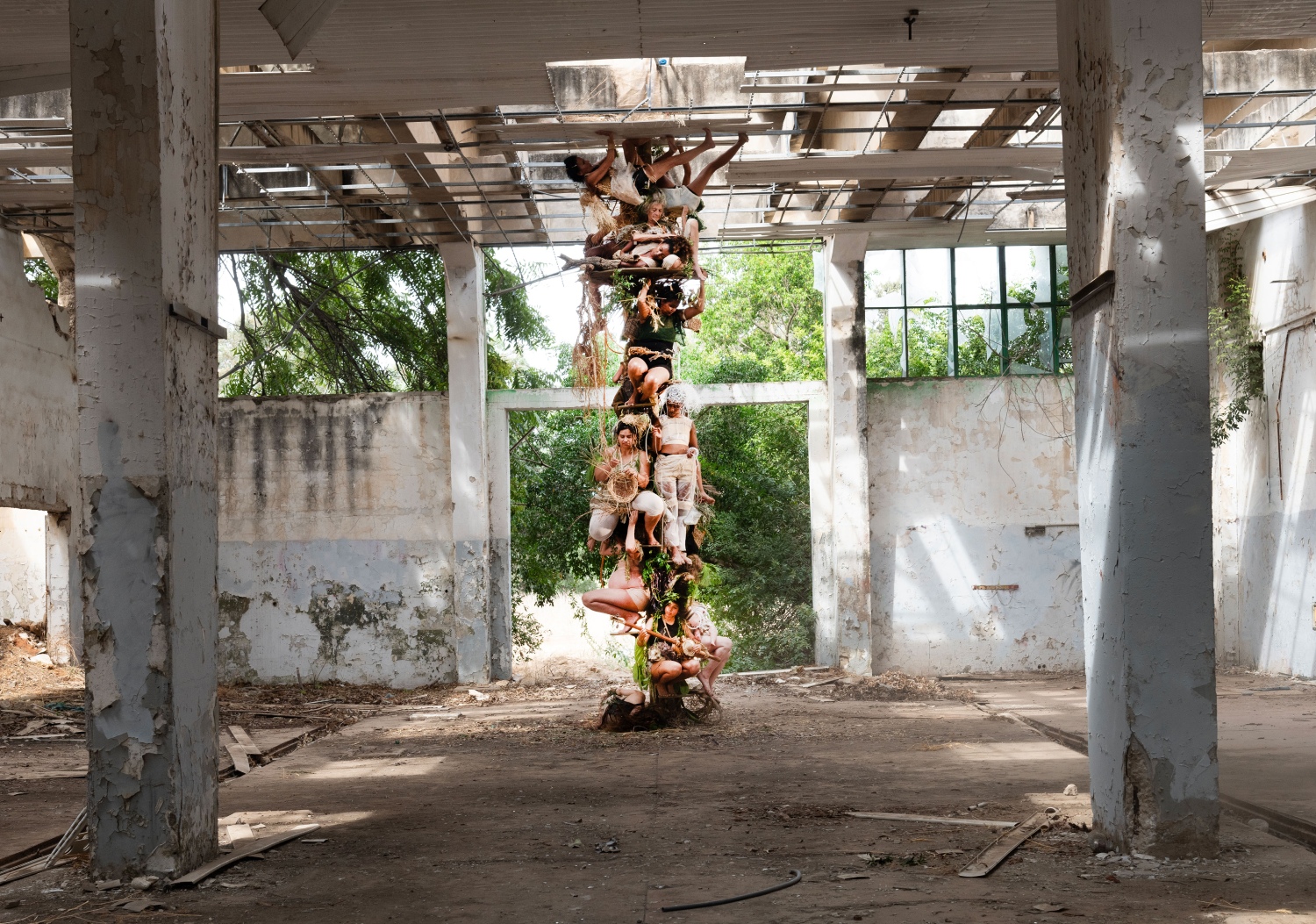
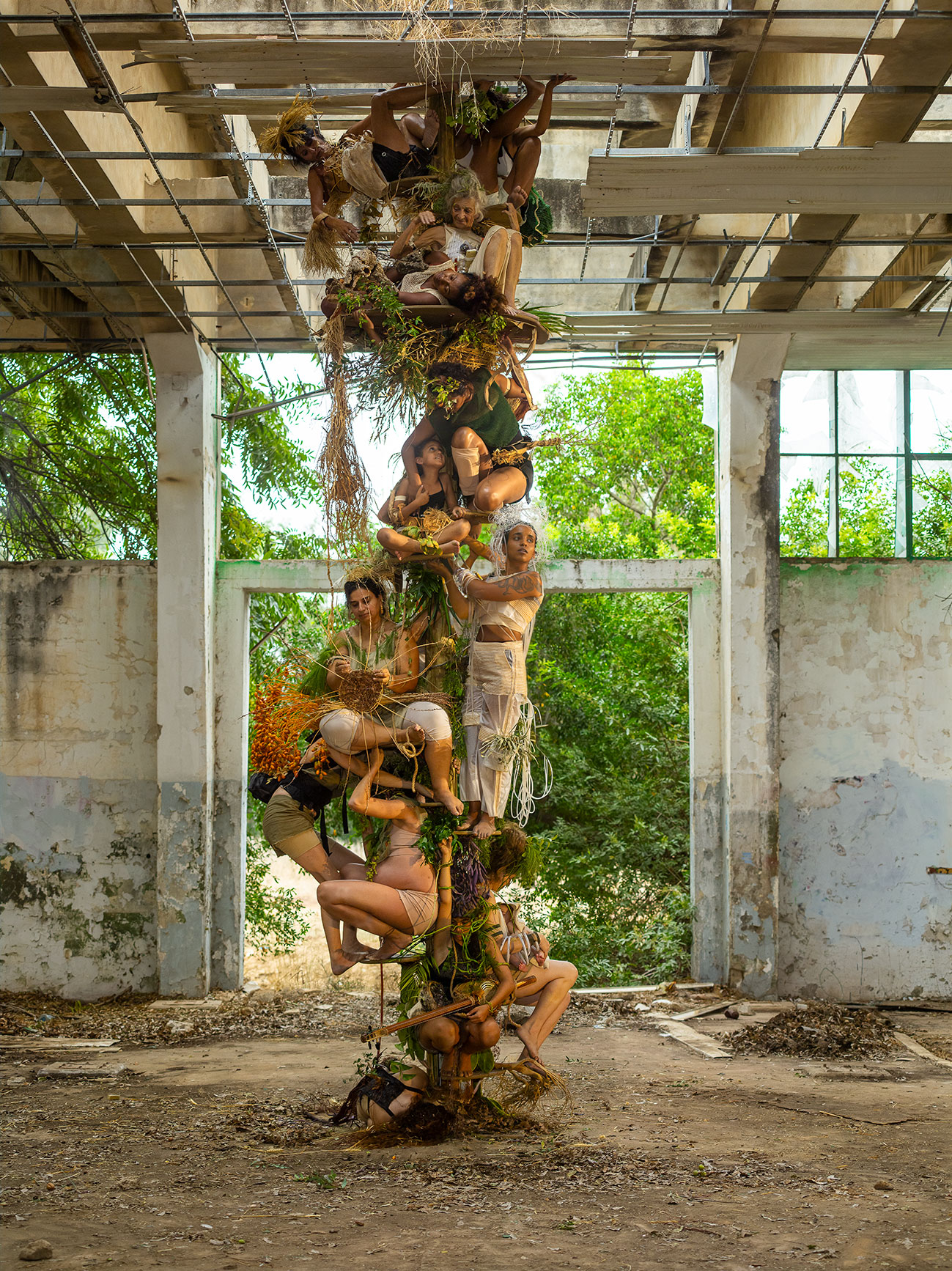
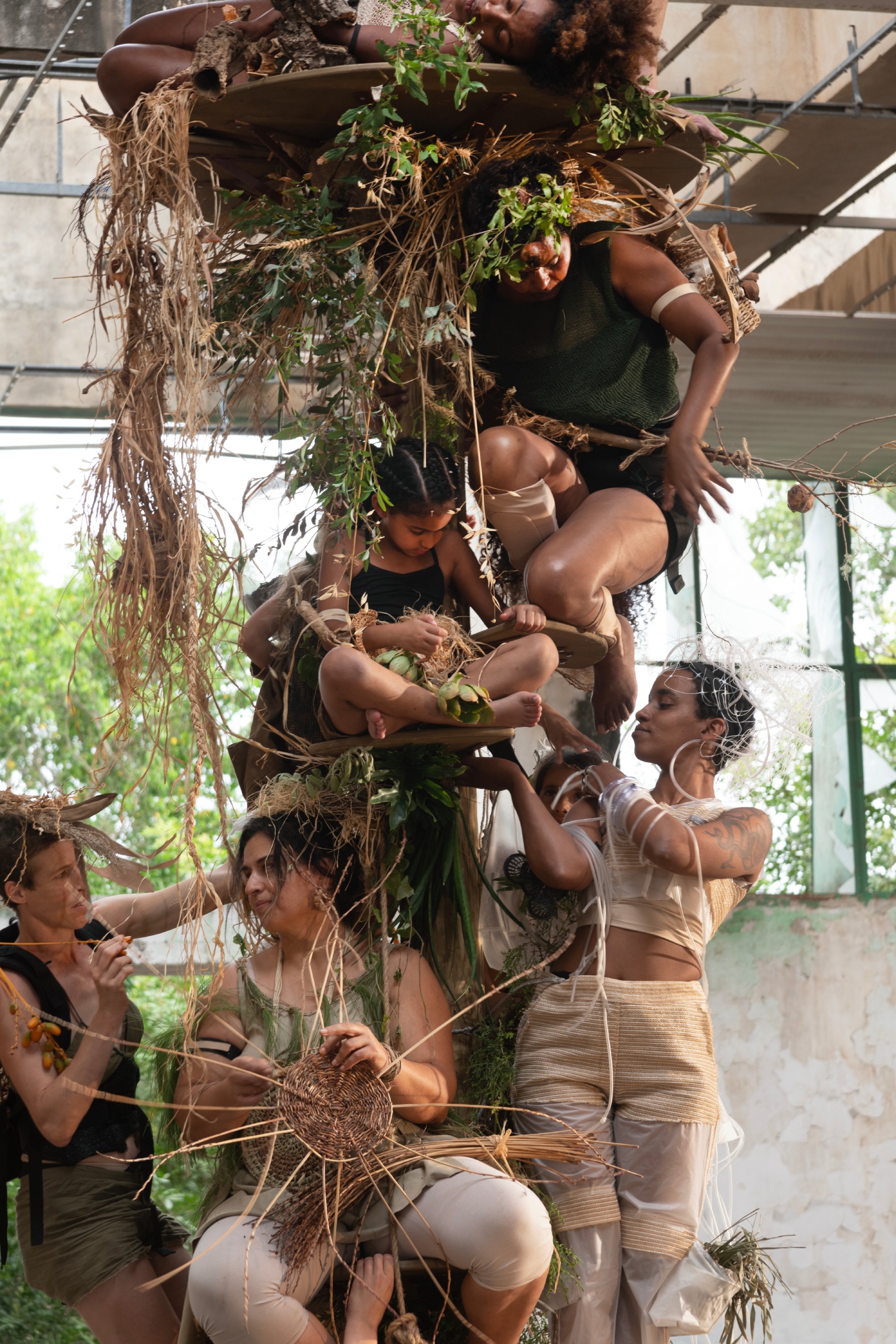
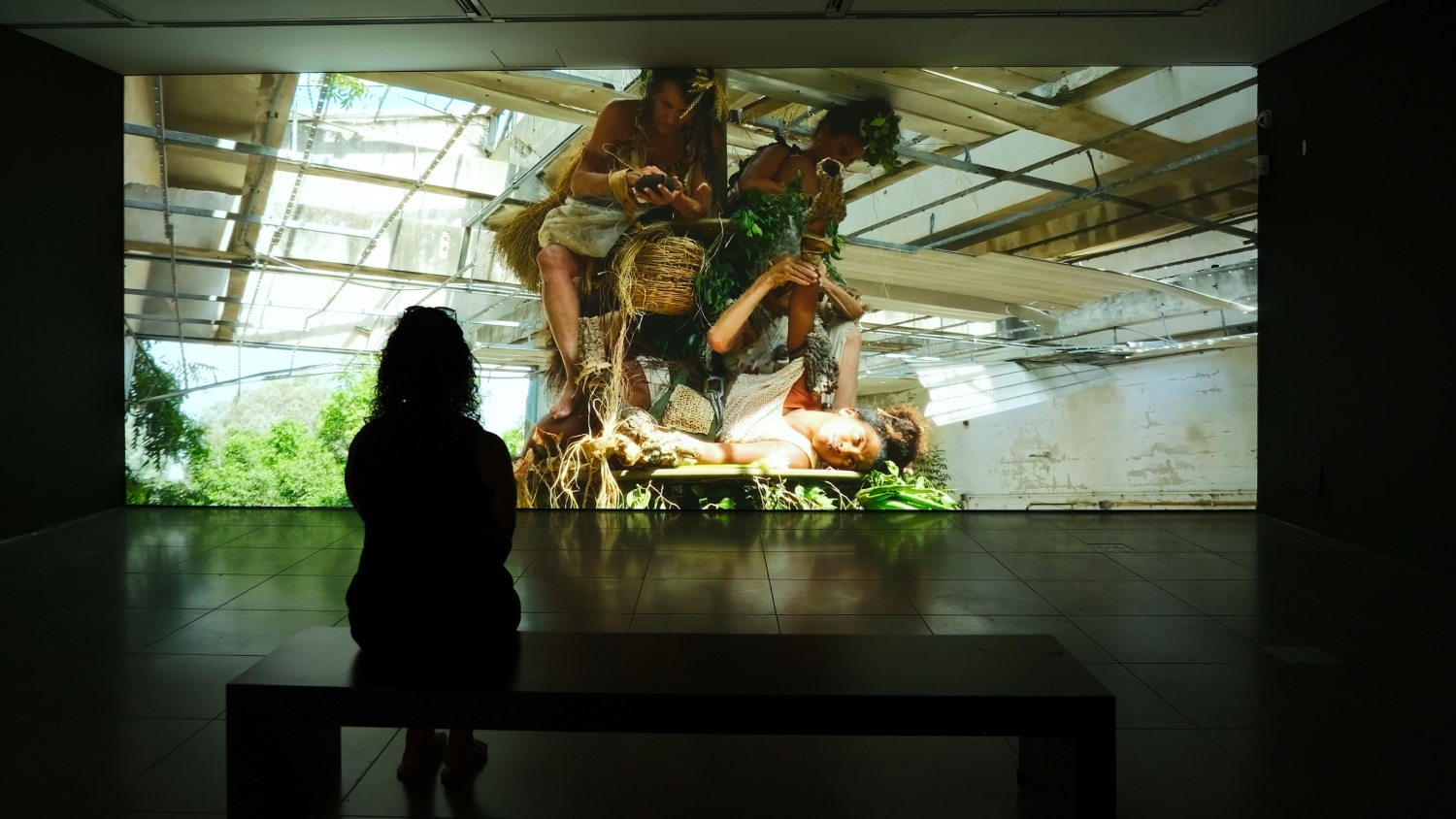
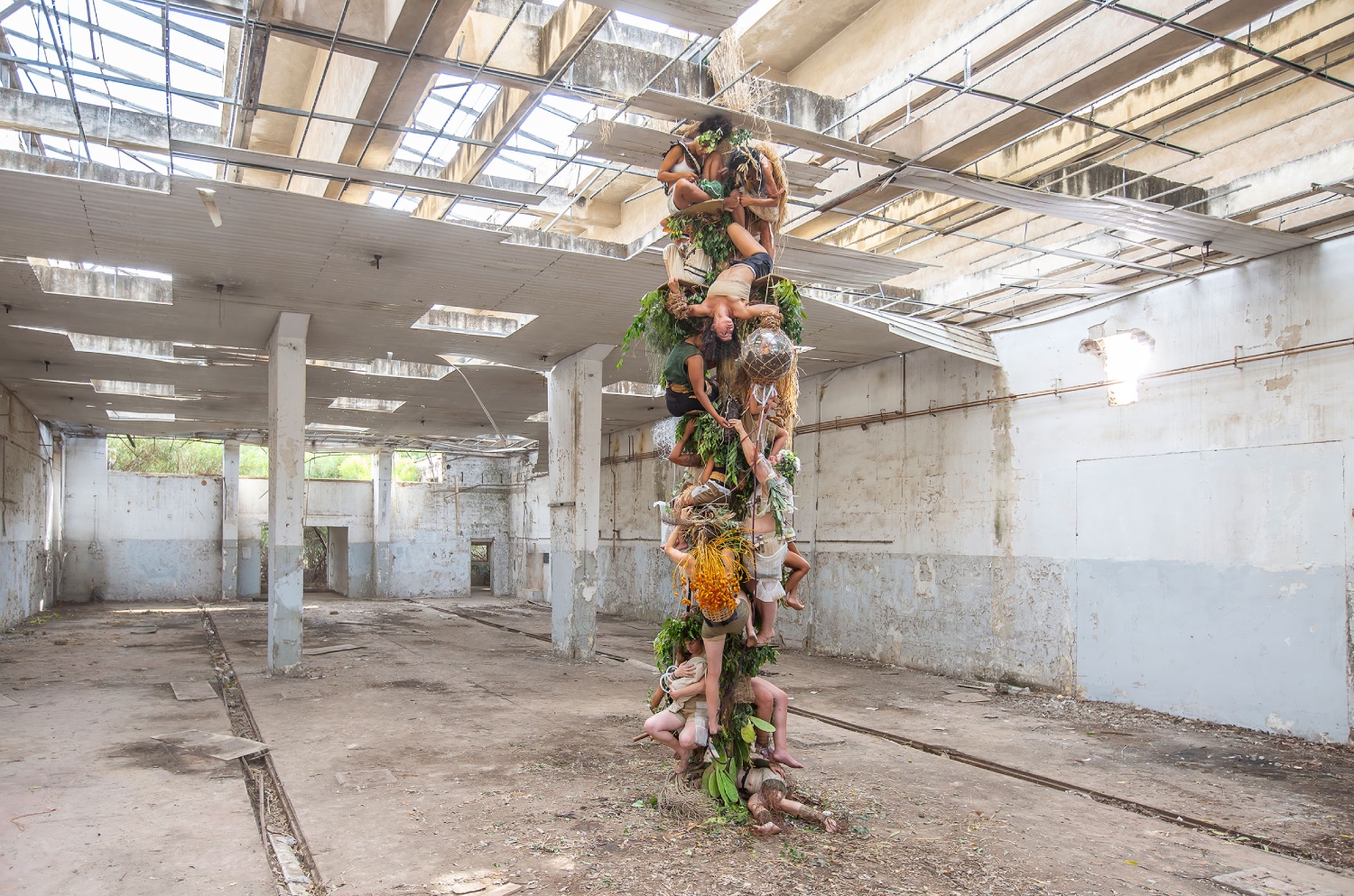
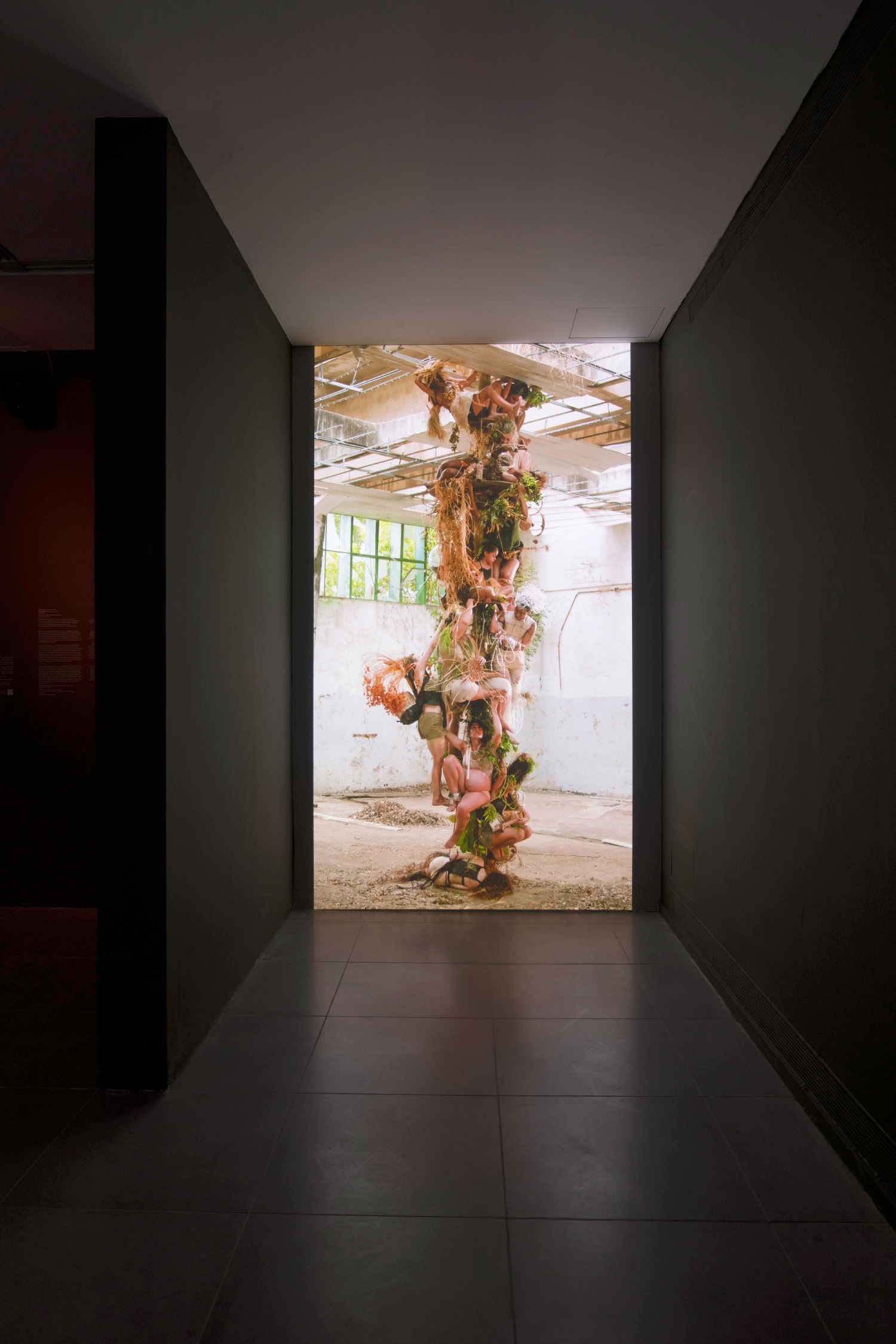
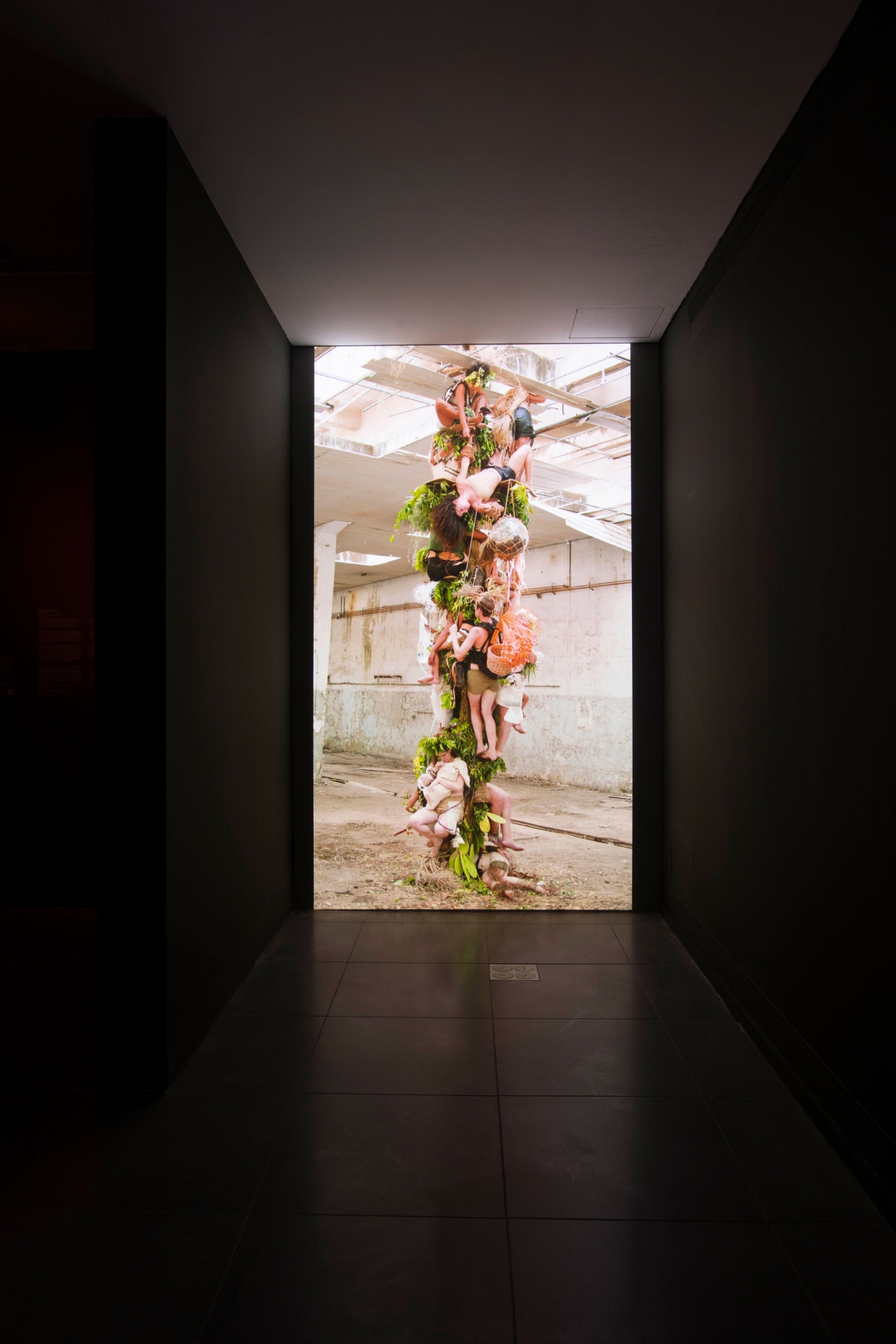
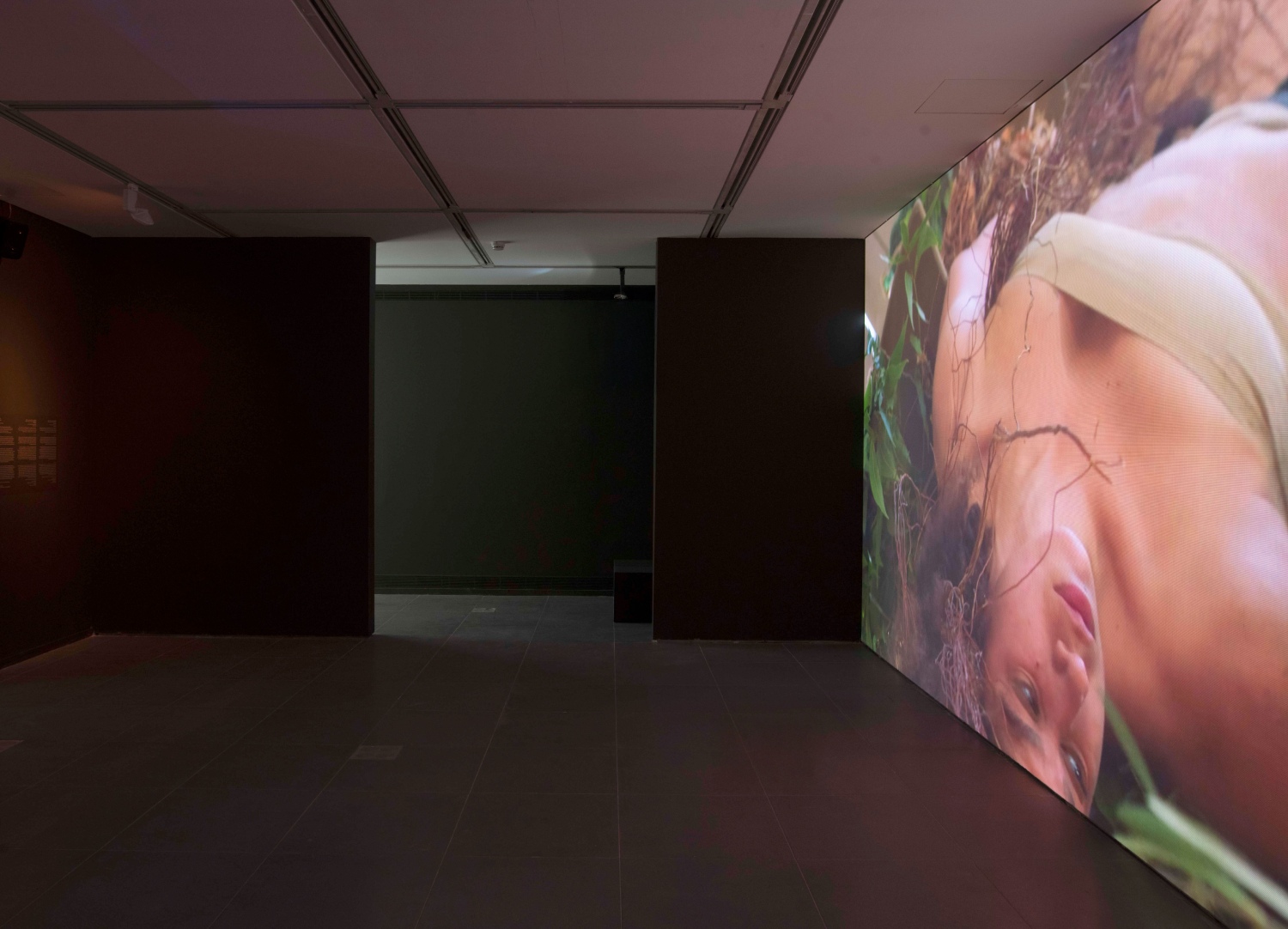
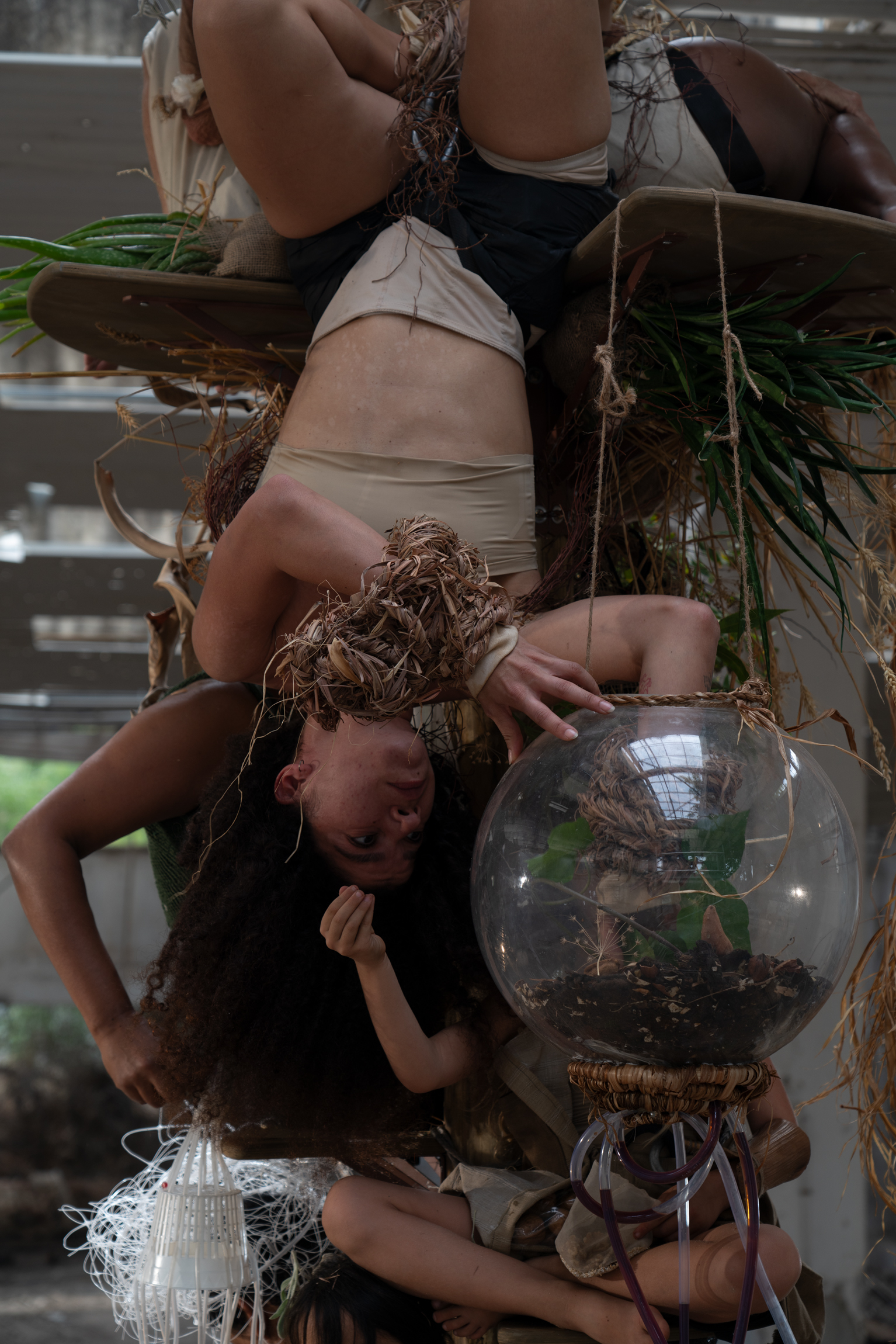
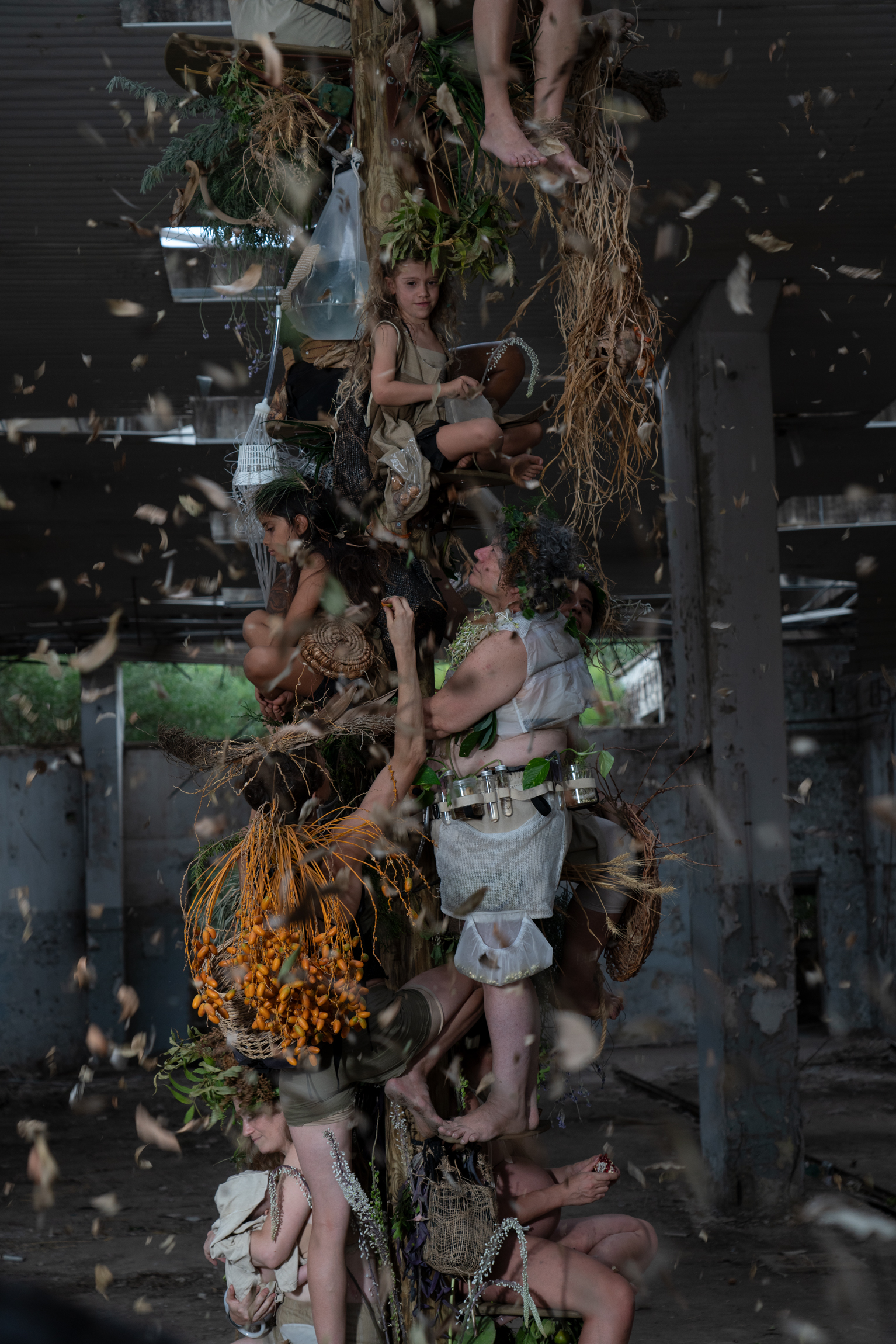
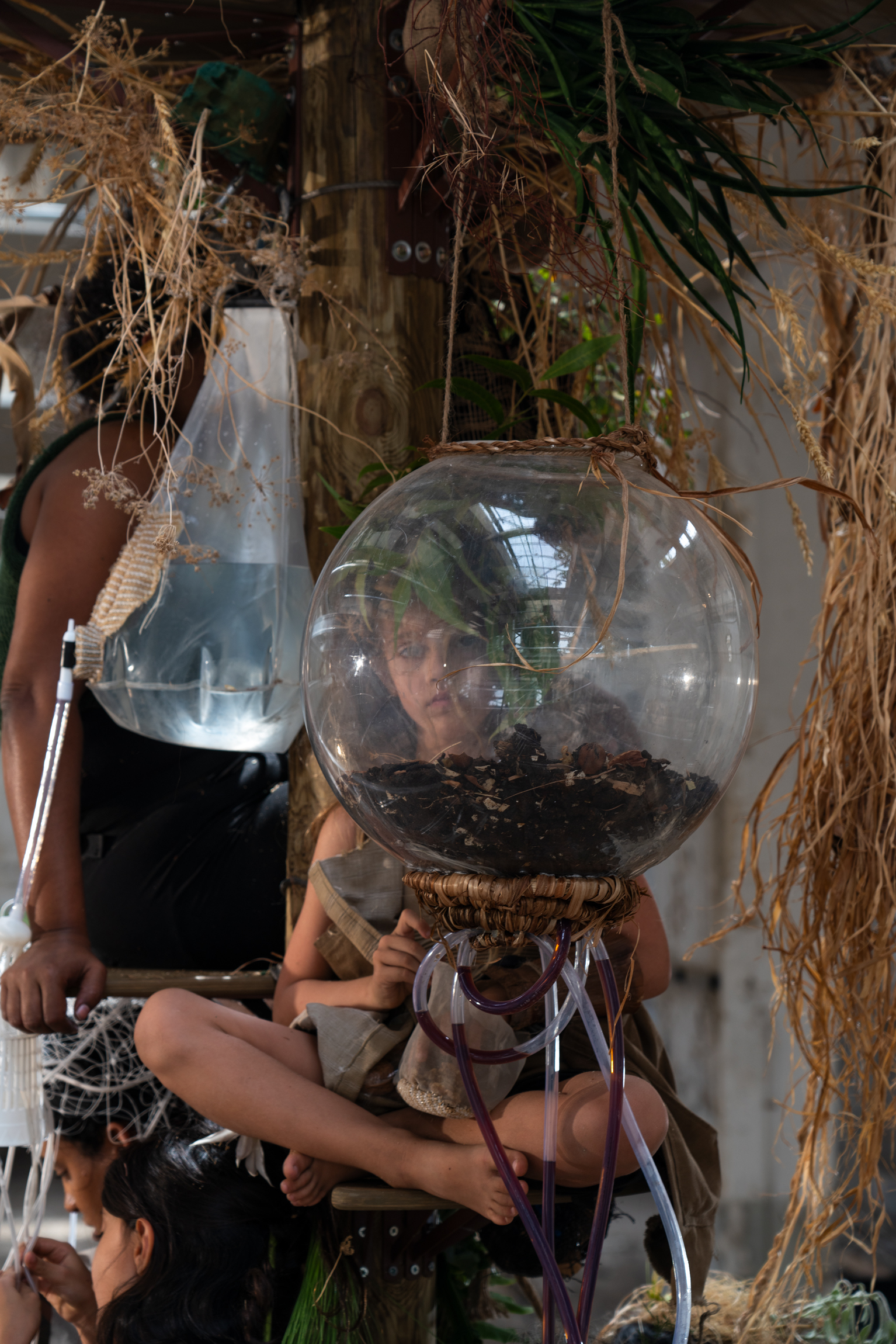
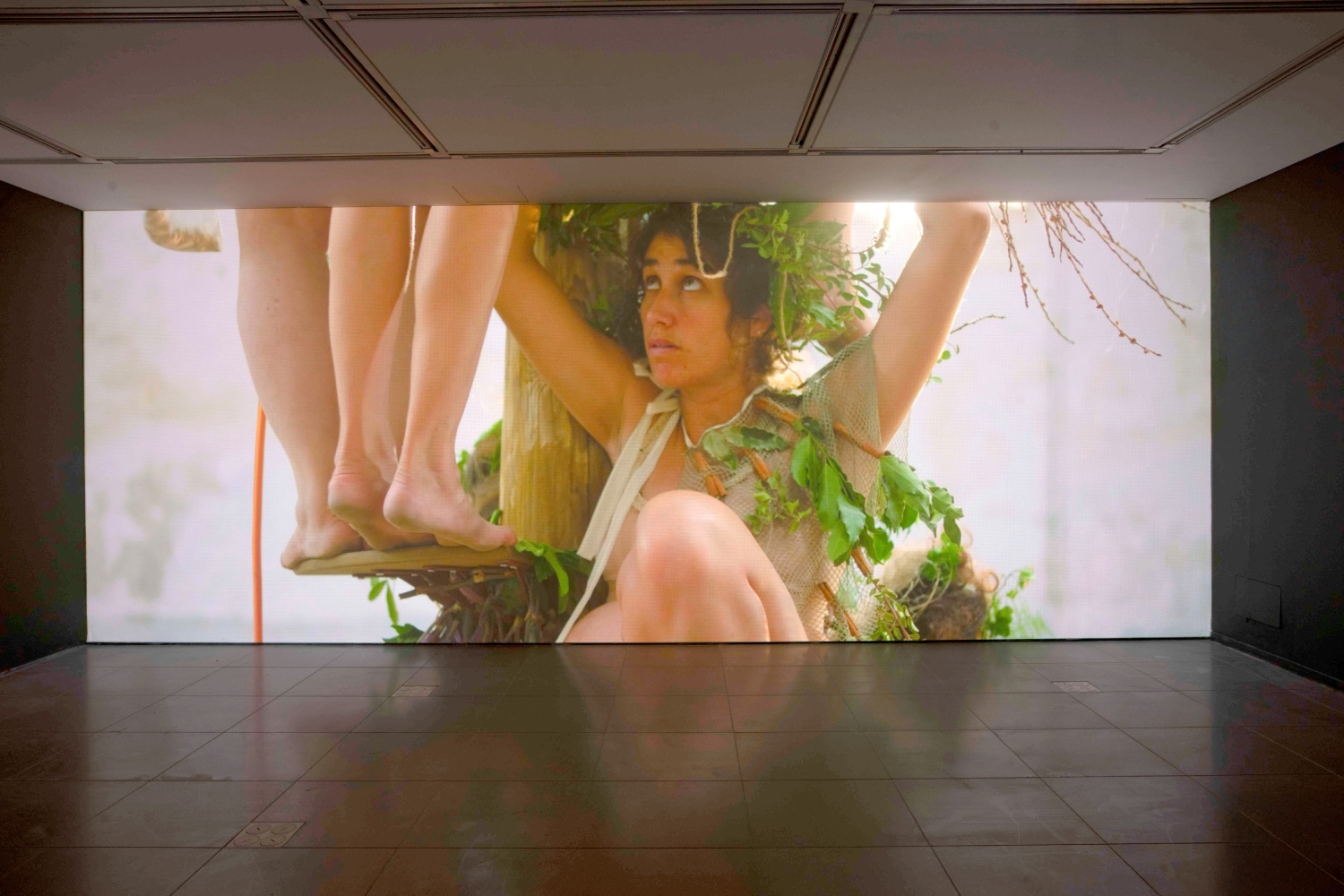
As we approach the gallery, a woman’s voice echoes softly through the space, making the female presence known even before we see the video Bliss. Once we fully enter the space, we are met with a wide shot of female figures who hold plants and flowerpots in their hands while they run through a deserted field toward an abandoned building. As the work unfolds, we are exposed to a female world that exists in a new reality but is rooted in tradition and folklore. Having made their great escape from ordinary existence, the women create a self-sufficient “bio-system” for themselves and are transformed into a living column that also attempts to support the rickety ceiling of the abandoned building. All stages of life are represented: prepubescent girls; teenagers; young women, including one who is pregnant and another who nurses an infant; and older women. As they create their tribal column, each woman has a specific role within the community, usually related to sustenance and the cycle of life – one peels fruit and feeds her friends, one takes the remains for composting, one sprouts the seeds, and one is healer.
The camera returns a few times to the old healer who applies salves to a young woman whose arm is turning into bark, indicating her metamorphosis to a tree. The myth of Daphne – who became a laurel tree in a desperate attempt to escape the advances of Apollo – is unfolding before our eyes, perhaps also suggesting a reason for the film’s initial scene of fleeing women. The primary image of the work – the female column – draws inspiration from Greek caryatids: architectural supporting columns carved as female figures. This term translates as “maidens of Caryae” – an ancient town near Sparta with a temple dedicated to the goddess Artemis. Caryatids are linked to Artemis and possibly also to the women of the Caryae, who were enslaved after the town betrayed Athens. In Bliss, the women wind themselves around a column, and over time the column becomes a living human pillar.
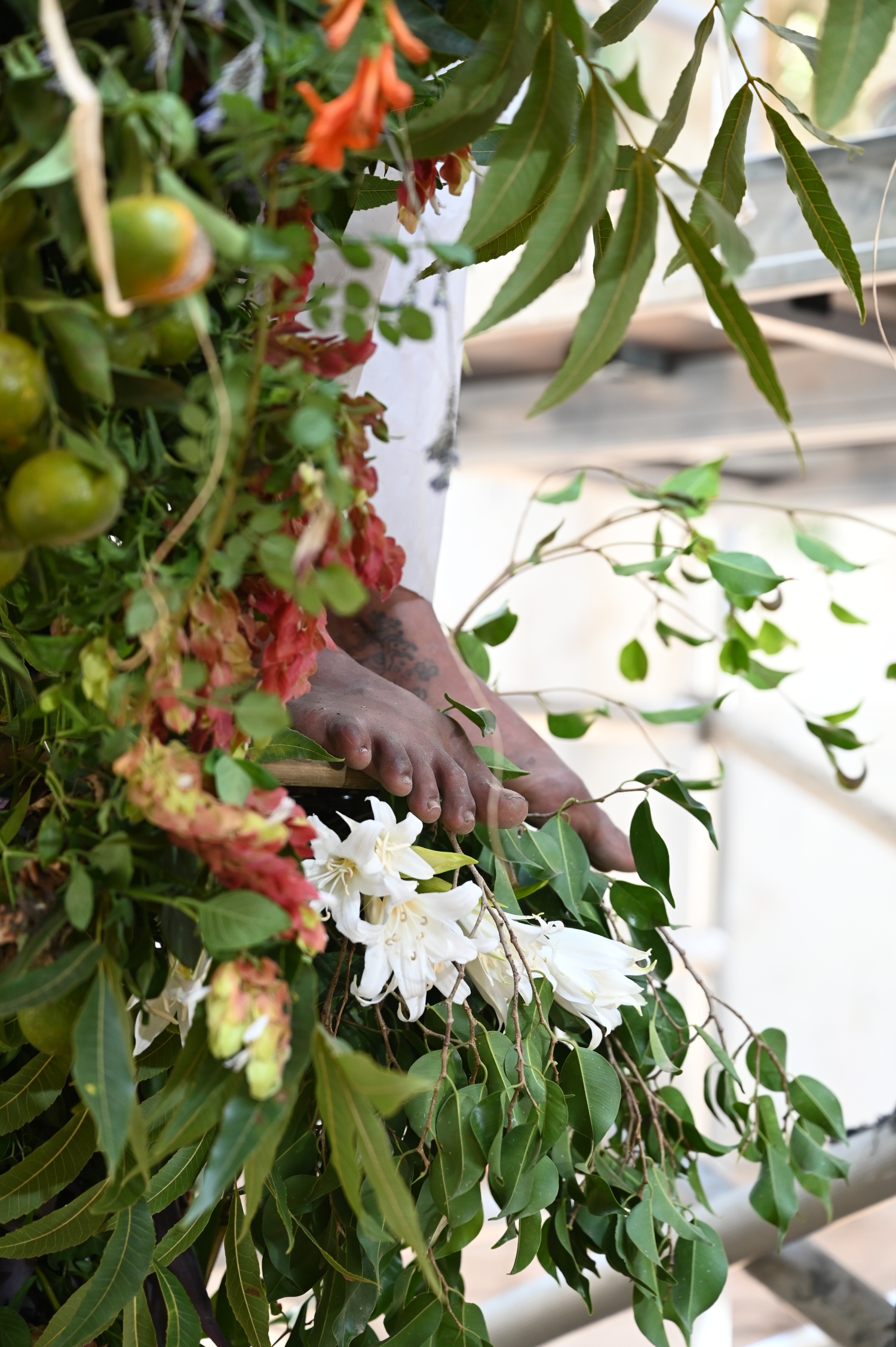
Messages of feminism and ecological sustainability are woven into the work, as we see the seasons pass and the women able to feed and heal themselves. The land itself no longer exists; what remains is the idea of nature and the land, represented by its characteristic flora from biblical times to the present: pomegranates, dates, carobs, almonds, walnuts, the Wandering Jew plant, pine trees, and more. Just as the allegoric wandering Jew was condemned to be cut off from his land, the women seen here must create an organic community and independent economy while detached from the land. In the alternate reality produced by this rupture, they are condemned to be the building’s supporting pillar. To remain fixed in place indefinitely, to weather natural disasters, to evolve slowly into a new life form. Through this trauma, and it is worth noting: the opening scene where all the women run for their lives was shot on the project’s last day of filming, October 3, 2023; four days later, this scene became a chilling and prophetic reflection of our reality here in the land of Israel. So yes, through this trauma, within the rhythm of the seasons and demands of nature, the question remains, did they attain bliss.
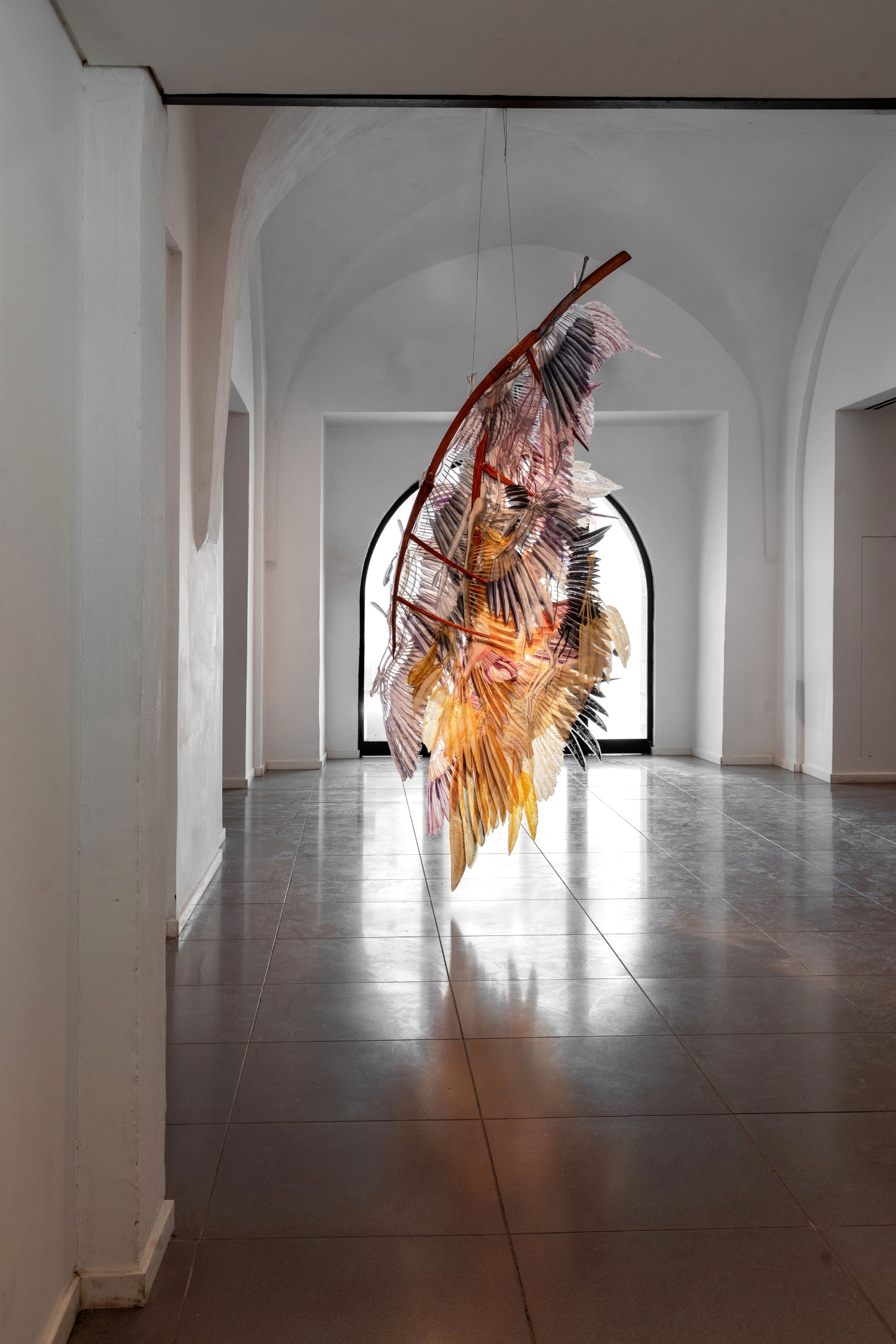
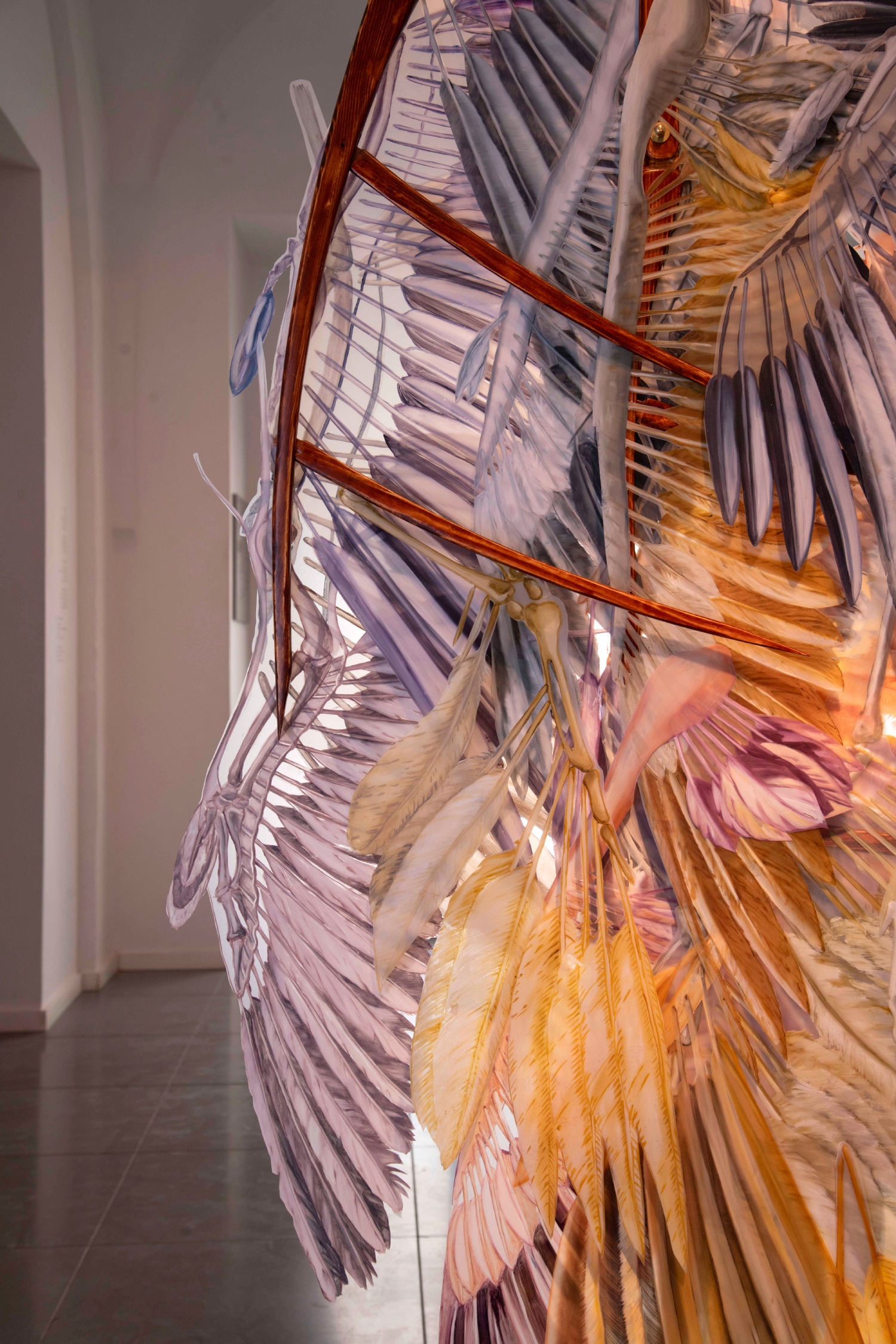
Zahara, the earlier work that complements Bliss, follows the tragic story of its namesake in a dreamlike sequence. Zahara Levitov (1927–1948), a heroic woman pilot serving in Israel’s armed forces at the time of the establishment of the state, was killed when her plane malfunctioned and crashed into the outer wall of the Monastery of the Cross in Jerusalem. The narrative reimagines the Zahara’s final journey, in which she is aided by an older woman – a figure representing Ruth Dayan, the wife of Moshe Dayan, military commander of West Jerusalem at the time, who arrived on the scene and assisted in bringing the mortally injured young pilot to the hospital. The video follows the two protagonists as they make the final journey, dragging an enormous broken feathered wing, referencing both Zahara’s airplane and the story of Icarus. The constantly present wing, both weighty and ephemeral, suggests the fate of a once-vital limb now rendered useless.
Set in present-day Jerusalem, deeply intertwined with the city’s modern history and mythology, Zahara offers a soft yet powerful vision of female mutual support and empathy. The characters’ surroundings and states of mind shift, we are witness to dreamlike journeys and bustling cityscapes, culminating in a poetically choreographed, gentle release from life.
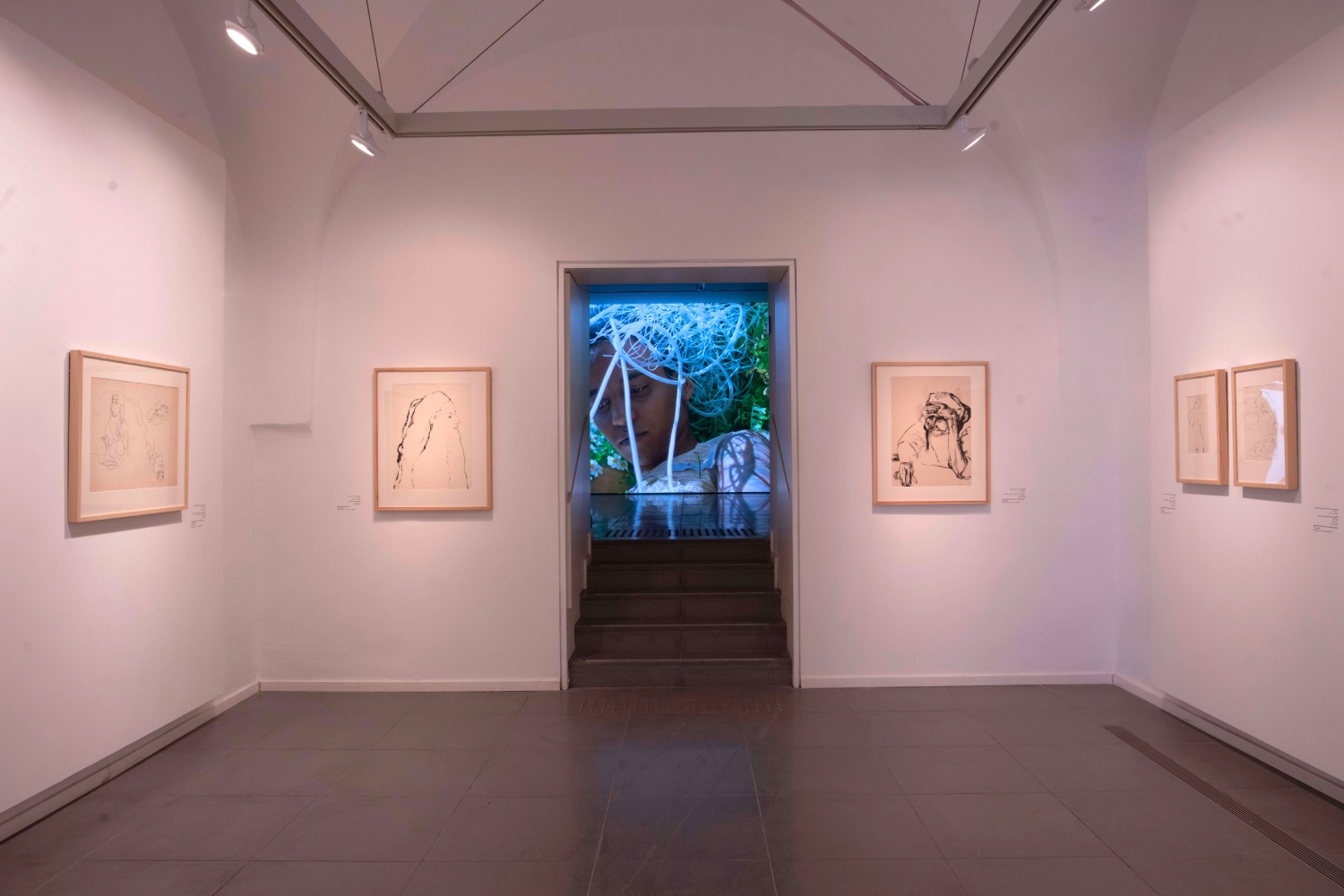
Despite their differences, both of these works exemplify the conceptual world of Ayelet Carmi and Meirav Heiman: an archetypal female world that is based on larger-than-life historical figures, while presenting ordinary women with whom anyone can identify or empathize. The exhibition also connects to Anna Ticho, who over the years has attained the status of the mother of artists in Israel. It is interesting and even inspiring to read Carmi and Heiman’s works through the prism of the Tichos’ Jerusalem legacy and the art of Anna Ticho, whose drawings are so embedded in the city and its surroundings and number so many portraits of women who lived in Jerusalem. As can be seen on the gallery walls, she had an eye for female archetypes, young and old. Her aging women of wisdom resonate with the subjects of Carmi and Heiman’s video works. Positioned within the context of Ticho’s portraits, their contemporary explorations reflect the cultural and historical landscape of Jerusalem, bridging past and present.
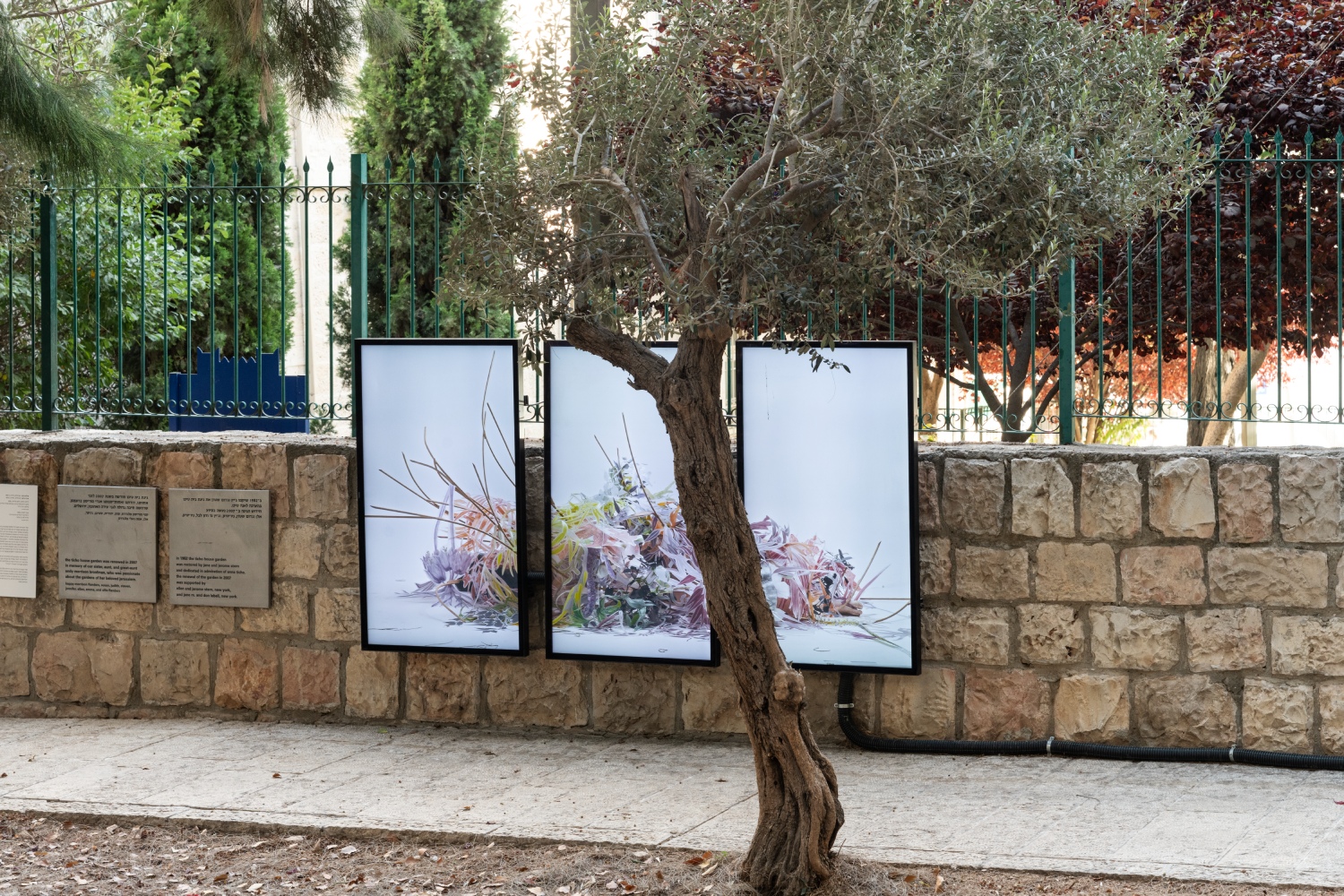
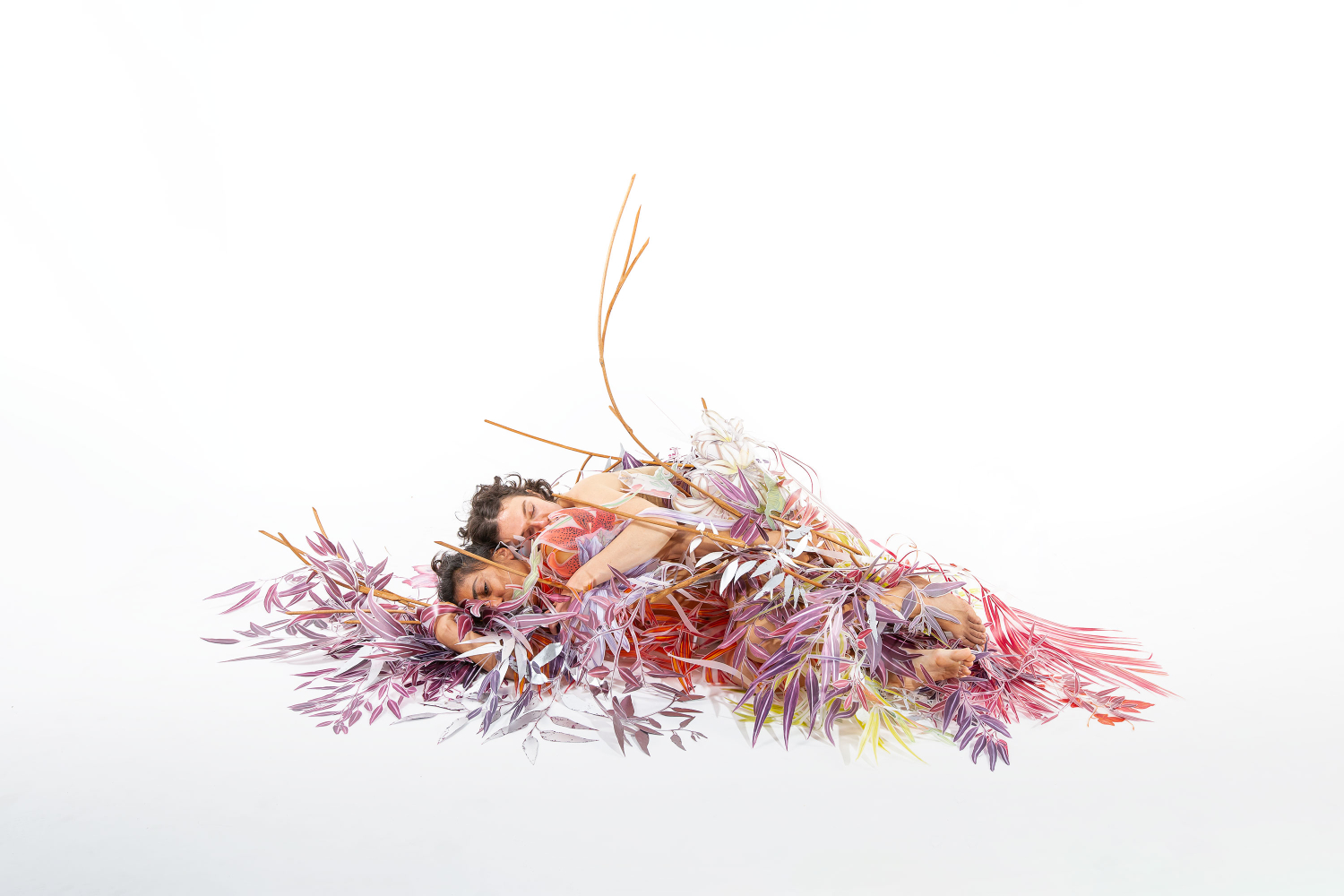
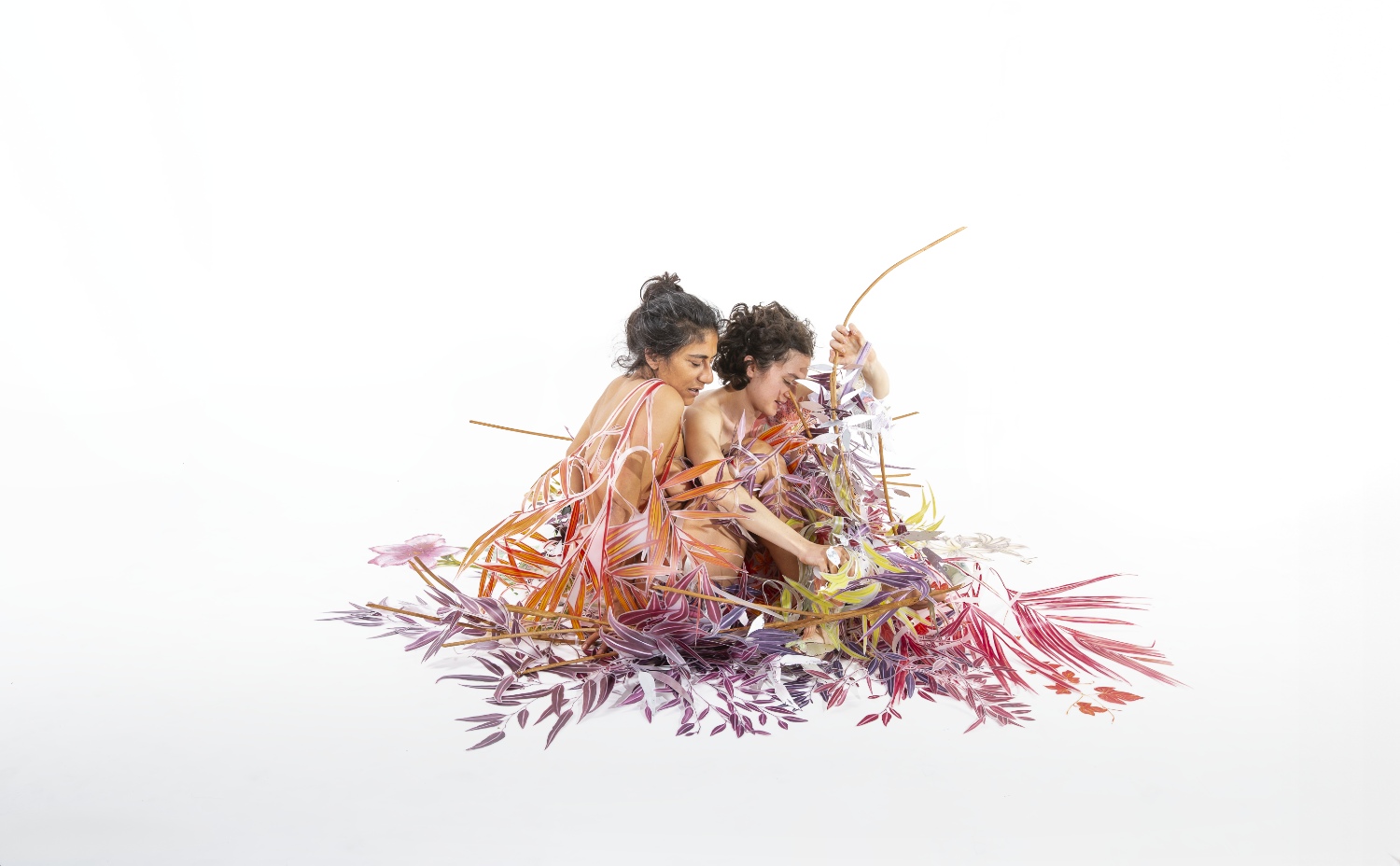
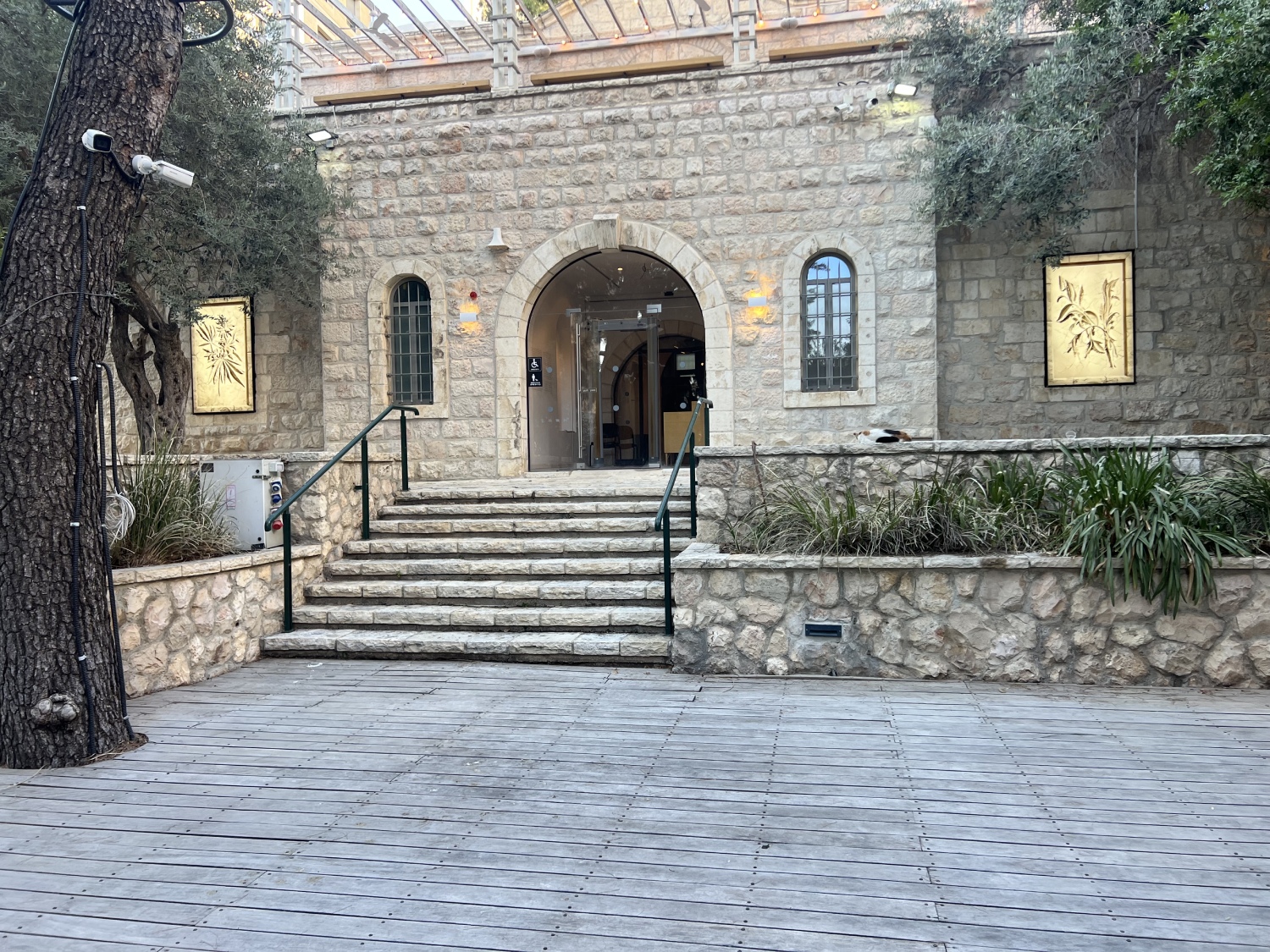
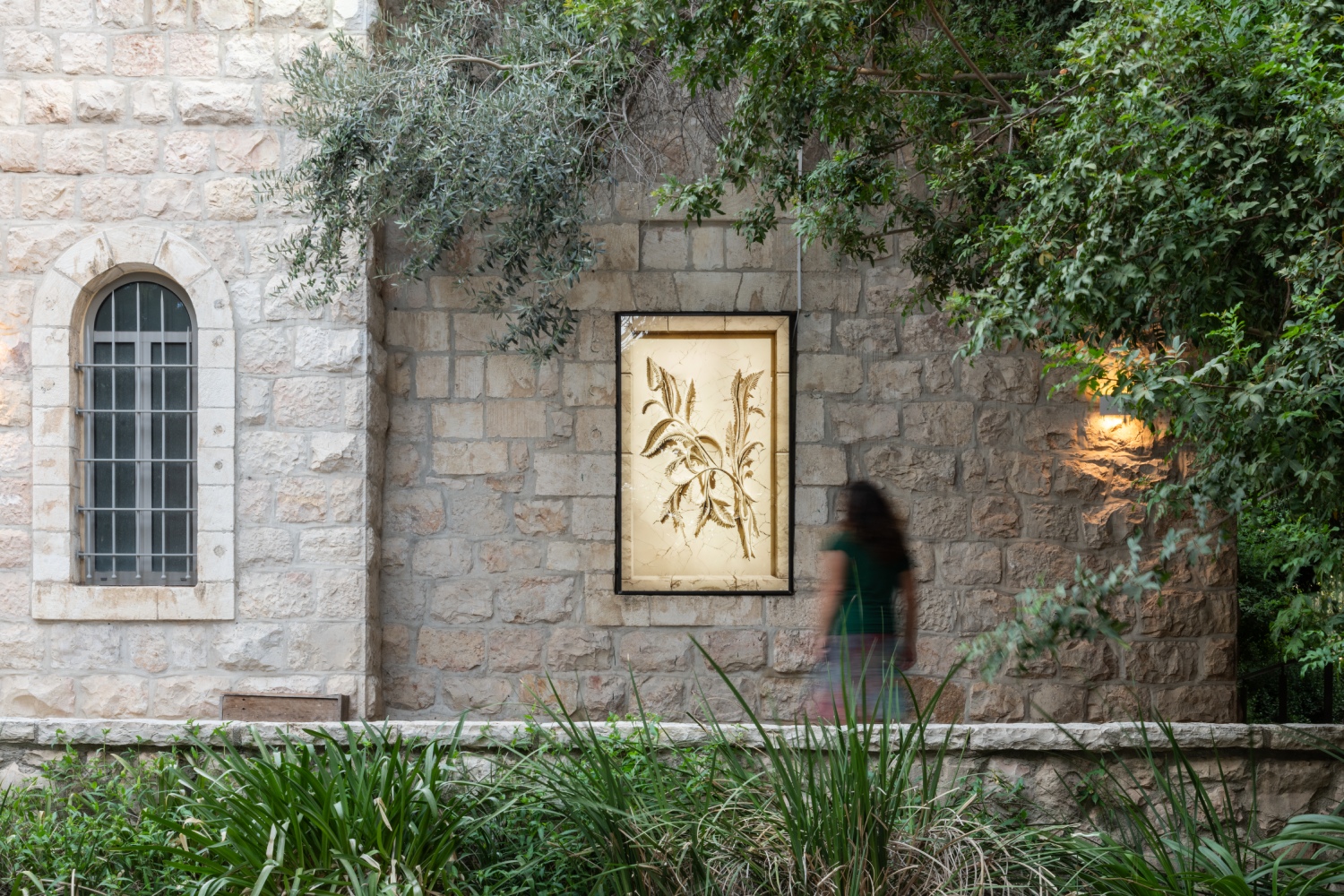
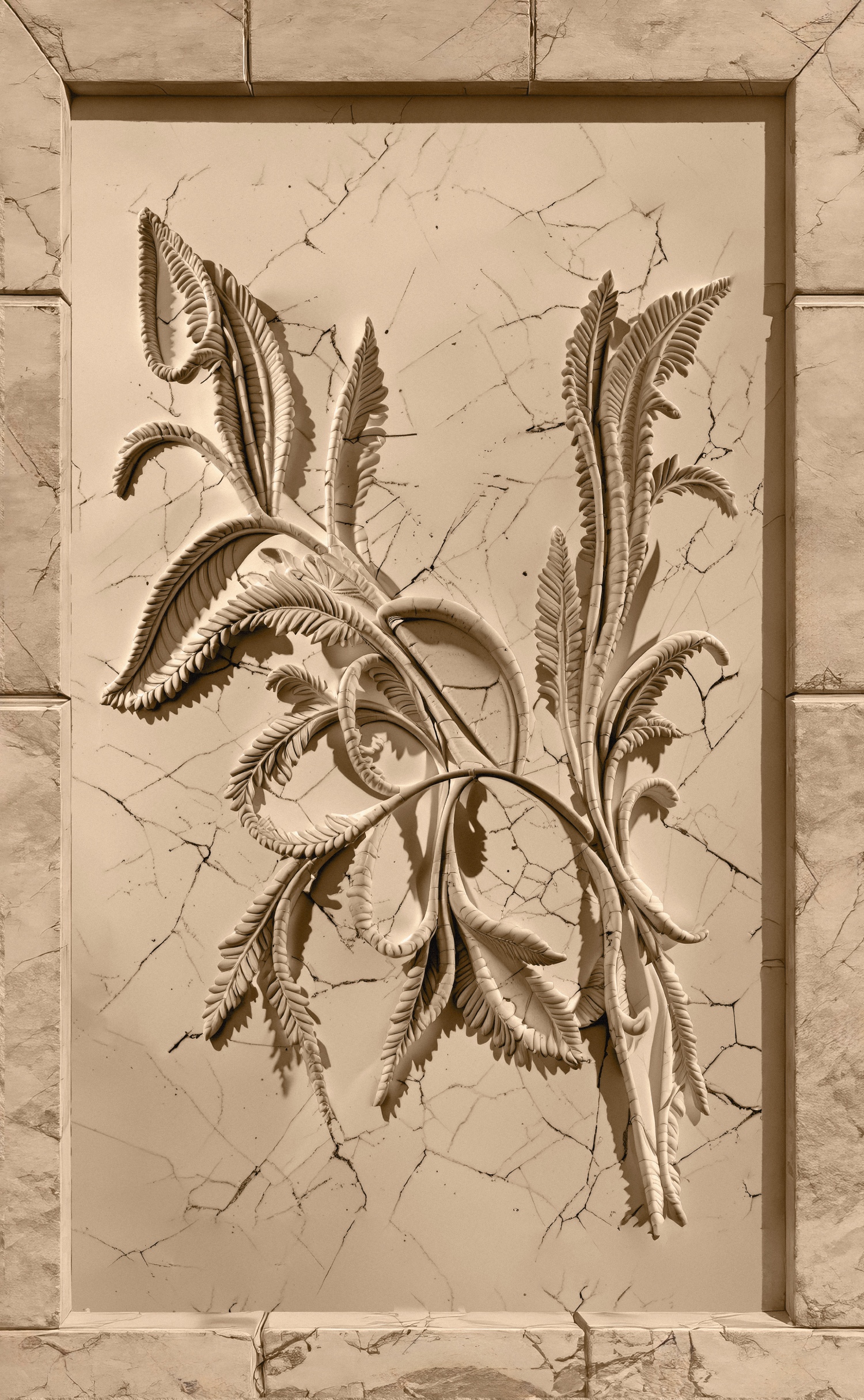
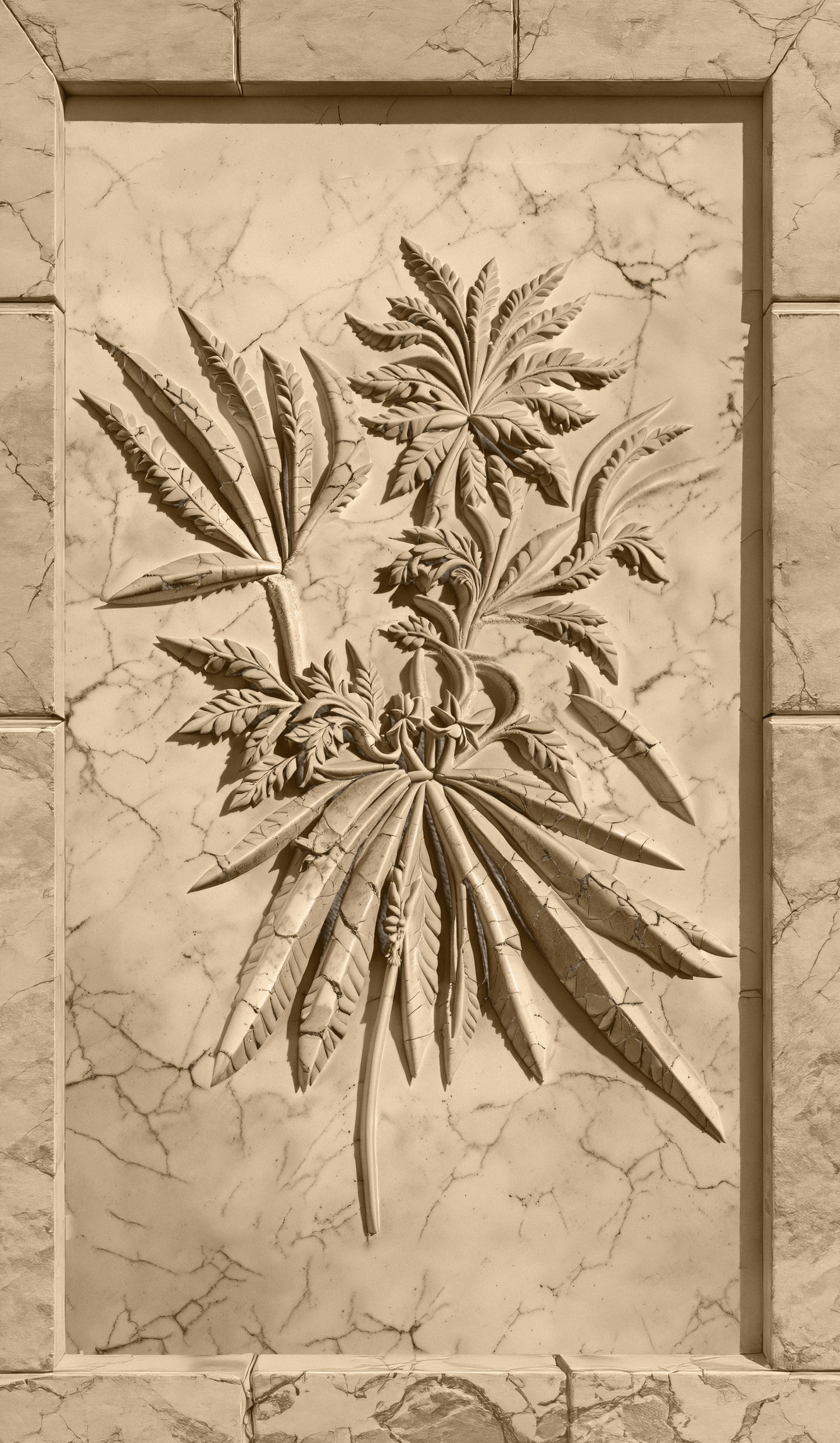
Thematically connected to the video works inside Ticho House, two new lightbox images, Fern and Eucalyptus and an additional three-screen video work entitled Endless Days and Sleepless Nights can be viewed in the garden of Ticho House. These site-specific works were inspired by the garden’s vegetation. In the light boxes, digitally processed leaves and branches create the illusion of stone reliefs embedded in the façade of the house, thus echoing the ancient mythological and architectural motifs alluded to in Bliss and Zahara.
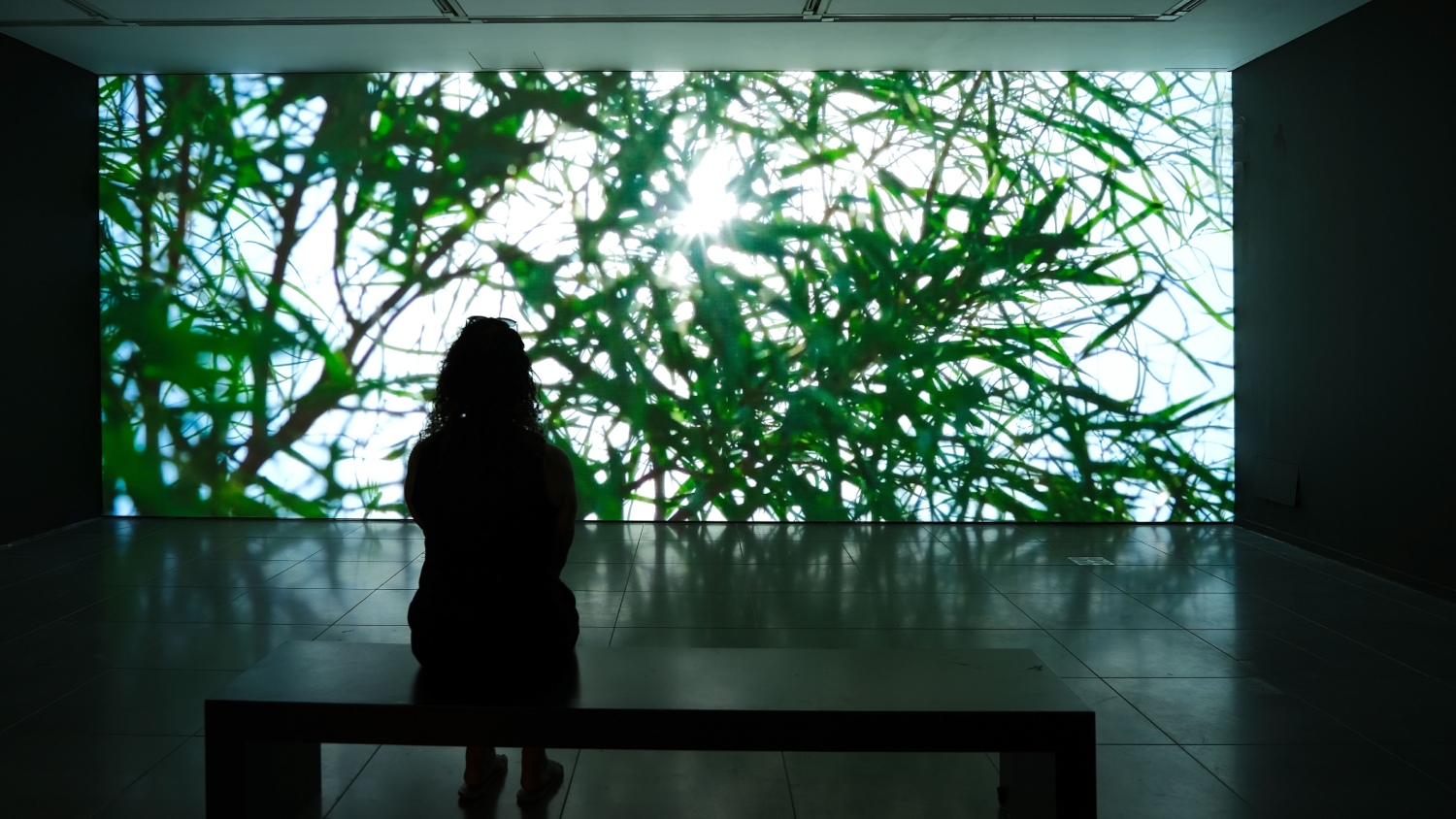
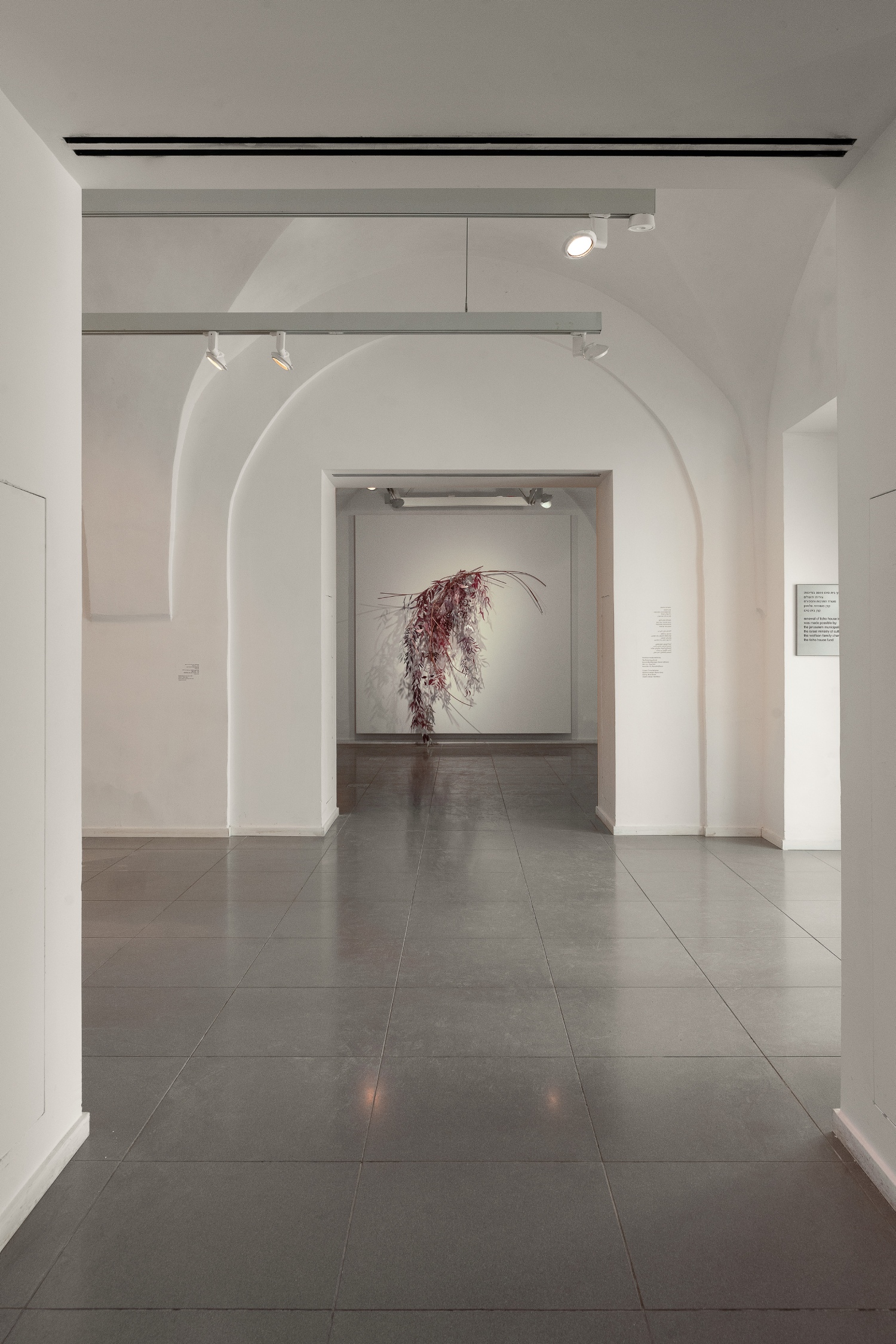
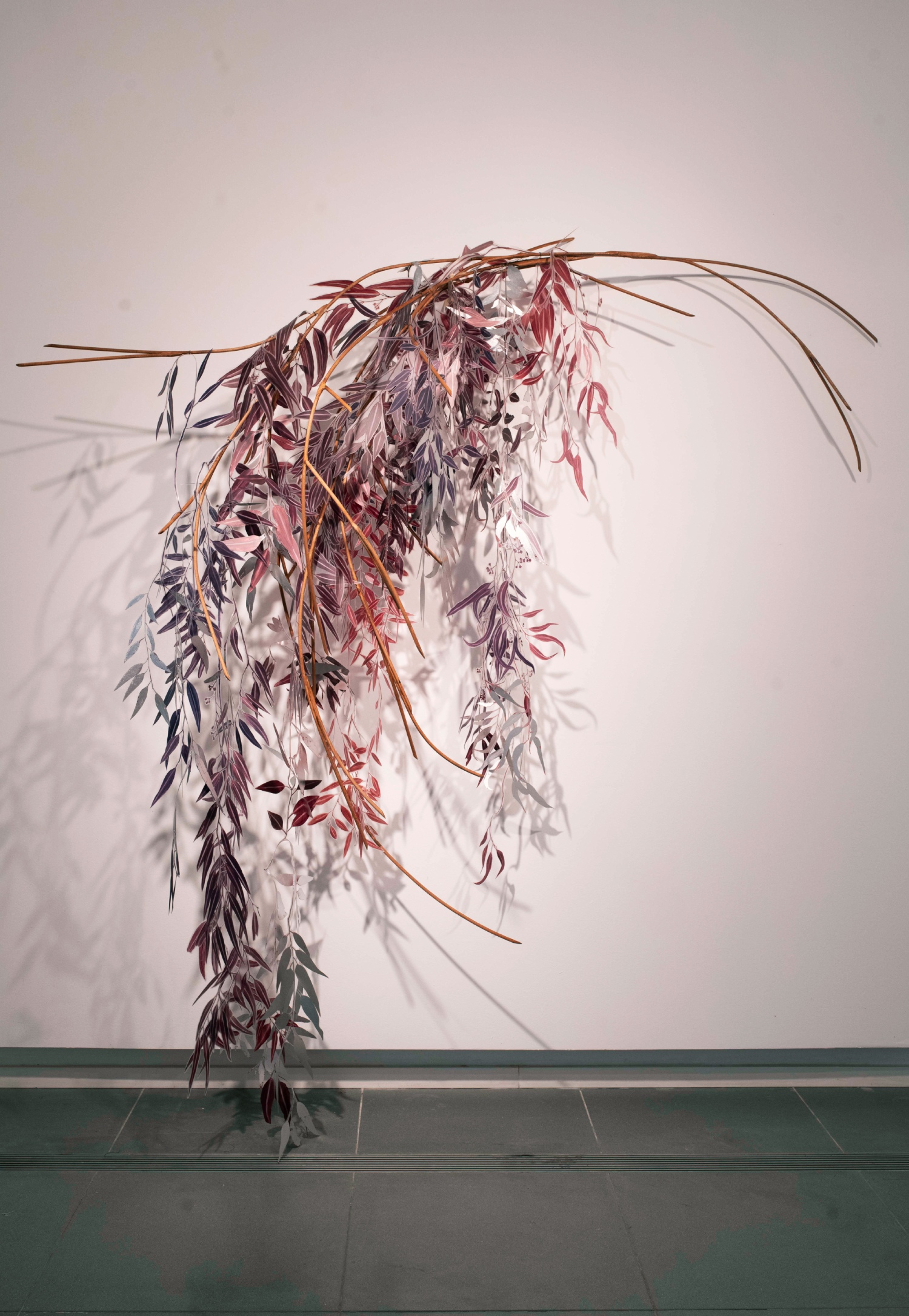
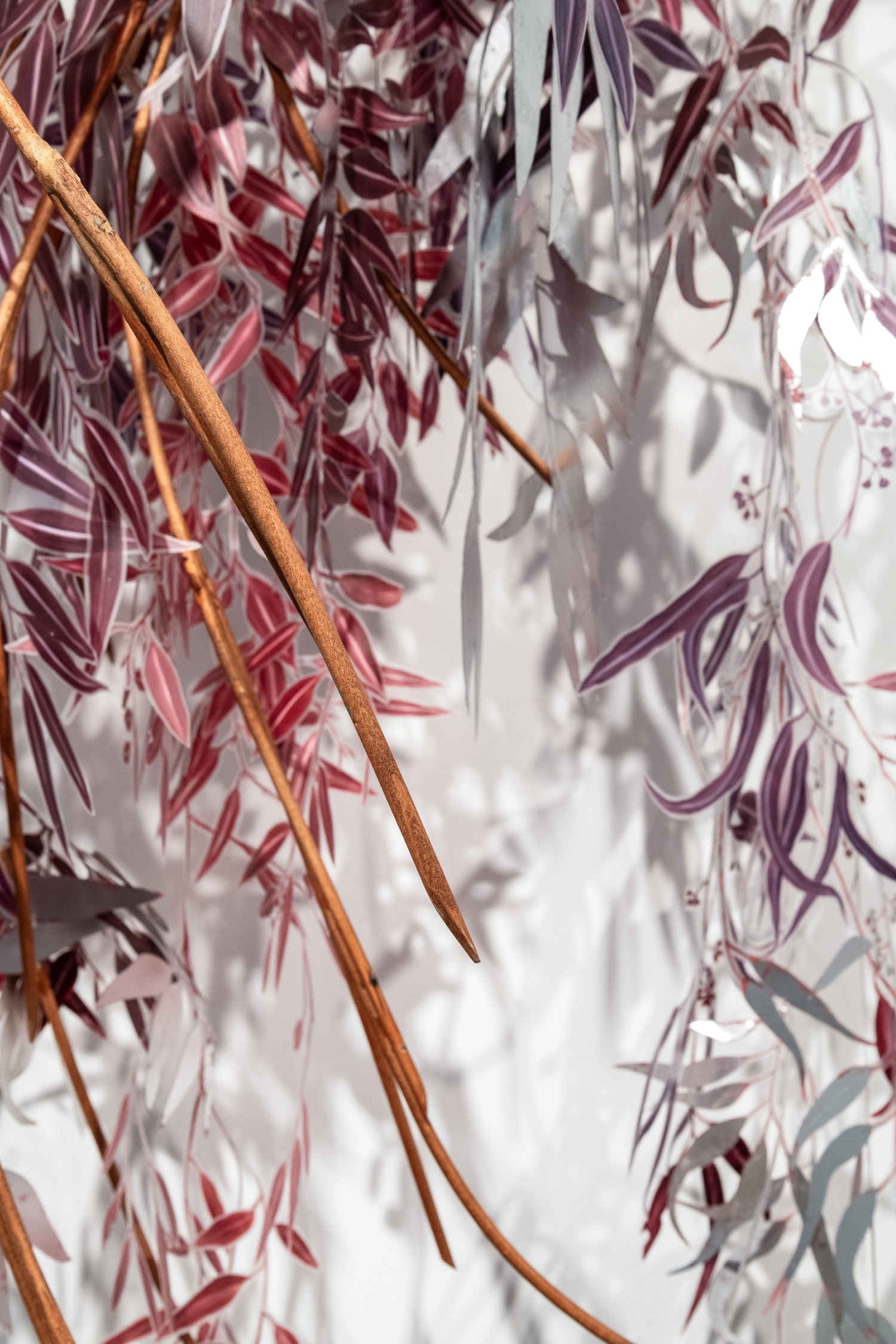
The three-screen video work shows an endless loop of movement, a gentle trembling of leaves caused by the human bodies underneath. The leaves and branches themselves, the result of a long process of observation and craft, are on display in the house. Carmi meticulously prepared these recreations of vegetation, as well as Zahara’s wing (also on display inside), while carefully taking into account the changing shades of the leaves as the seasons unfold and the interaction of the shimmering feathers’ colors. Thus the respective disciplines of Ayelet Carmi, a painter and sculptor, and photographer Meirav Heiman complement each other, with the crafted objects assuming a performative dimension in the videos.
The two works experienced in the garden drive home our disconnection from the soil and from nature. Natural materials are transformed into something unnatural: painted plastic leaves and feathers, digital images. Even as Carmi and Heiman engage with the subject of sustainable harmony with nature, they also point out our distance from it.
Lust for the Sky
Dafna Satran
The opening sequence of Bliss (Hemdah) (2025), a video work by Ayelet Carmi and Meirav Heiman, depicts a group of women running—perhaps fleeing. Clutched in their hands are various plants; from their bodies hang baskets, bags, test tubes, and jars. They take refuge in an abandoned structure, where they organize into a tiered human formation. Within this vertical constellation, they nourish and care for one another, drawing upon the botanical and nutritional resources they carry. The group spans generations—young and old, one pregnant, another nursing. Each woman enacts a role: one waters, another oversees germination, and one weaves straw baskets, passed along the ascending chain of women to meet their needs.
In her 1986 essay The Carrier Bag Theory of Fiction, science fiction writer Ursula K. Le Guin advocates for a story centered not on the hunter, but on the gatherer.[1] The hunting story is undeniably seductive—structured around a hero, a weapon, and a kill. The gathering story, by contrast, follows a collective—mostly women—working together. It resists dramatic climax, especially of the violent kind, and its technologies are not instruments of death but of sustenance: sacks, bags, and other vessels used to gather food and carry it home—together, and more efficiently than slaying a mammoth. For Le Guin, described as “an anthropologist of other worlds”,[2] the gatherers’ story becomes emblematic of a form of literature that eschews heroism, resists conflict-driven structure, and follows a non-linear progression.
Carmi and Heiman, too, may be understood as anthropologists of other worlds. Their works depict realities suspended between past, future, and a parallel present—uncertain whether they ever existed, will come to be, or are unfolding elsewhere. In Bliss, the cave paintings that inscribe the myth of the hunt are replaced by contemporary graffiti, covering the walls of the industrial structure that shelters the fleeing women in a moment that feels both primordial and apocalyptic. This quasi-gatherer collective, ascending from ground to ceiling, is composed solely of women—as if the male hunters have been left behind, the world stripped of their presence. Their formation is not fleeting but enduring: we see them through day and night, awake and asleep, as the seasons change and the weather shifts. “There did I know a delight (hemdah) beyond all delight,” wrote Dahlia Ravikovitch in the poem that lends the work its name, evoking a utopian landscape, lush and overflowing.[3]
Folded into the title “Bliss” (Hemdah) is the idyllic nature of the alternative feminine existence envisioned in Carmi and Heiman’s video—a life rooted in plant-based nourishment and mutual care, free of heroism and conflict. Yet, the technologies that make this existence possible deserve attention: the gathering tools Le Guin describes—bags and containers that allow the women to carry food and healing to their destination and pass them along the vertical column they have built. Though equally essential is the column itself: a five-tiered structure of women, the lowest anchored to the ground, the highest supporting a ceiling on the verge of collapse.
The artists conceived this column drawing on the Greek caryatids—architectural support columns carved in the form of women. What, then, is the relationship between the hemdah—the “bliss/delight”—inherent to cooperative feminine existence and its phallic form of a caryatid?
In her book Inclinations: A Critique of Rectitude (2014), feminist philosopher Adriana Cavarero interrogates the entrenched Western canon that depicts the human as an upright figure, and the masculine ideal as vertical. In contrast, she proposes the inclined human—epitomized in the maternal figure who bends toward her child. Cavarero questions the association of inclination with femininity and instead advocates for an ethics of leaning—of attentiveness, of offering and receiving support—over the rigid, individualistic ascent toward verticality. “Maternal inclination,” she writes, “could work as a module for a different, more disruptive, and revolutionary geometry, whose aim is to rethink the very core of community.”[4]
Viewing Bliss raises the question of whether the feminine existence it enacts aligns with the legacy of uprightness and the patriarchal order that produced the caryatids—or whether, despite their rise, the women of the column offer a counter-geometry, of form and ethics, whose very movement carries a disruptive force.
These questions invite a broader reflection on two interwoven themes that recur dialectically in Carmi and Heiman’s oeuvre: movement and the body. An examination of three of their video works—Bliss and Zahara, currently on view at Ticho House, and The Israel Trail: Procession, shown last year at the Israel Museum—reveals a subtle dynamic in their collaboration, one that both connects and contrasts horizontal and vertical motion, as well as the constrained body and the transcending body of their heroines.
In the work Zahara (2021), the artists return to the story of Zahara Levitov, a Palmach fighter who, in 1948, joined the new Israeli army as a pilot and, later that same year, died in a plane crash into the wall of the Monastery of the Cross in Jerusalem. The video opens with an aerial shot that gradually closes in on the heroine, lying in the Valley of the Cross at the foot of the monastery. She rotates slowly in a spiral, evoking the failure of flight—her body tethered to a large, broken wing trailing along the ground. After she collapses, another woman enters the frame, attempting to mend the wing—a figure recalling Ruth Dayan, who had evacuated the injured Levitov to Shaare Zedek Hospital. Now, following this vertical fall, the two embark on a reverse motion: a horizontal journey on foot through the streets of Jerusalem, toward the hospital. The fall becomes a prelude to walking, producing a spatial movement that stands in contrast to the trajectory of Bliss: in Zahara, the collapse of flight gives way to grounded progress; in Bliss, the path of escape spirals upward into ascent.
Situated between the two works is Carmi and Heiman’s groundbreaking piece, The Israel Trail: Procession (2018), which traces a passage across the landscapes of Israel—a traversal that echoes Zaharah’s journey, though framed by the Israeli natural environment in place of the urban backdrop. However, a constraint imposed by the artists—the prohibition against foot-to-ground contact—demands that movement along the path be carried out in elevation, above the earth. This horizontal motion, enacted through a range of vertical maneuvers using devices that enable mobility without touching the ground, seems to foreshadow the ultimate verticality realized in Bliss.
The three works can thus be situated along a shared continuum of movement: beginning with descent, continuing through horizontality, and culminating in ascent. In Zahara, a vertical crash gives way to horizontal progression; in The Israel Trail, that journey persists, now elevated above the ground; and in Bliss, horizontal motion serves as a springboard for vertical propulsion. Yet in all three, a striving toward verticality is present: even Zahara ends with the heroine ascending the historic Shaare Zedek Hospital building, stair by stair, until she reaches the roof. There, she circles once more—this time as the aerial shot slowly pulls away, turning skyward.
Moreover, in all three works, the upward movement represents a physical achievement by the participants, attained through their confrontation with constraints imposed by the artists. The heroine of Zahara must carry a large, dysfunctional wing—what the artists call a “useless prosthetic limb.” In The Israel Trail and Bliss, the participants are denied the basic ability to place their feet on the ground. While in Zahara the impairment leads to grounding, in The Israel Trail and Bliss, the very limitation becomes a means of elevation. In both, vertical motion is accompanied by a narrowing of bodily freedom: in Bliss, this restriction intensifies, as the women’s transformation into a caryatid-like structure effectively roots them in place.
The women of Bliss are fixed to the vertical axis they themselves compose—like the women of Karyai who became columns, and like Daphne who became a tree, another symbol from Greek mythology echoed in Bliss. Several of the caryatid women appear in various stages of arboreal transformation; in one, we witness a companion tending to her hand, which has turned into a branch.[5] Yet the women of the column—like the participants in the trail parade and Zahara with her broken wing—evoke, more broadly, the fragmented remains of Greek sculptures and their Roman copies, known for their severed limbs. Such are the most famous caryatids from the Acropolis in Athens, whose arms exhibit varying degrees of amputation, and numerous statues of male heroes left without arms or legs. Considering Carmi and Heiman’s heroines in relation to these sculptural remnants and their place in art history may shed light on the nature of movement within their works.
The 18th-century art historian Johann Joachim Winckelmann, followed by contemporary philosopher Jacques Rancière, observed that the beauty and impact of ancient Greek statues with severed limbs lie in the tension between physical disablement and the heroic vitality they embody—where mutilation stands in stark contrast to rippling muscle. “Just as only the trunk remains of a mighty oak that has been felled and stripped of its twigs and branches, so the image of the hero sits there, maltreated and mutilated: head, breast, arms, and legs are all missing,” wrote Winckelmann of the Belvedere Torso in the Vatican, which he identified as a likeness of Hercules. “At first glance you will probably see only a shapeless stone. But if you are able to penetrate the secrets of art, then you will perceive a miracle.”[6] Rancière summarized the enchantment cast by this sculptural remnant by noting that “activity and passivity merge together, forming an equivalence,” suggesting that this very fusion gives rise to “the paradoxical efficacy of art.”[7]
A similar fusion unfolds in the work of Carmi and Heiman. Here, the paradoxical force does not emerge from any external ruin inflicted upon the piece, but from the charged tension it holds—between the constrained bodies of their heroines and the acts of heroism they perform.[8] The binds that hold them become the very ground from which resilience is forged.[9] Yet it is not only the heroines’ formidable physical exertions that leave their mark, but also the artists’ deep investment in envisioning and crafting the very strategies by which to navigate the constraints they themselves devised. It is an artistic gesture of narrowing and release, of confinement and motion—a movement played out in the shift from the horizontal to the vertical—where their paradoxical efficacy emerges.
In the three works discussed here, vertical motion—or its climactic peak—signals a technological achievement: aviation, transportation, and construction. In Zahara, this achievement is symbolic—we encounter the protagonist post-crash, her flight reduced to a vestige in the form of a broken wing. By contrast, in The Israel Trail and Bliss, technological feats actively generate the depicted movements. In these works, technological ingenuity becomes synonymous with artistic accomplishment—embodied in the design and realization of mechanisms that enable motion above earth and support the formation of a human column. Correspondingly, one may distinguish between artistic skill, or techne, in its traditional sense—as seen in Zahara’s wing, meticulously painted and cut over hours, an object in its own right, displayed alongside the video—and the techne of The Israel Trail and Bliss, a more contemporary mode of artistic competence in which an original idea evolves into a complex, multifaceted, and collaborative project.
The progression along the Israel Trail, without setting foot upon it, indeed offers an alternative to the pioneering ethos of conquering the land step by step. At the same time, it enacts another kind of conquest: a triumph over limitation through physical strength and inventive design. So too the “human caryatid”—a feminine, collective mode of existence that is simultaneously an acrobatic and architectural spectacle. The vertical movements in Carmi and Heiman’s work—culminating in the phallic apex of Bliss—embody forms of feminine power that challenge the masculine symbolic order, and perhaps participate in it. Additionally, this elevation, while offering an escape from the cultural codes inscribed on the ground, produces a kind of detachment from mundane life. In Zahara, the heroine’s failed flight draws her back into the streets of 'earthly' Jerusalem, into contact with the human and material world below. But in Bliss, the women’s elevation suspends them above the messiness of lived experience.[10] Their rise registers as triumph and as seclusion—inscribing, within a narrative of collective feminine existence, echoes of the solitary heroic tale.
Yet in Bliss, as in Carmi and Heiman’s earlier works, what unfolds before us is another kind of hero’s tale—a tale of heroines. It tells the story of a caryatid that is not one woman but many, and who are not petrified but alive. It is the story of a monument that stands not at the threshold of a public building, but within the shell of an abandoned one; a pole dance that has long since been reclaimed from the men’s club and now plays for the dancers alone. It is the story of Daphnes whose fates remain unwritten, of heroines whose achievements and limitations are entangled, inseparable, unresolved. Their ascent, too, warrants a closer gaze.
The women of Bliss do indeed form an imposing column, but this is not a classical caryatid form that erects a solitary woman for architectural purposes at superhuman scale. The vertical formation here does not arise from the kind of individualistic ascent that Cavarero critiques; rather, it is composed of women physically and ideologically leaning on one another. The women of the column, whose existence depends on mutual support, appear before the viewer in a wide range of postures: they sit, recline, lie down—horizontal, diagonal, and inverted. In doing so, they demonstrate how the inclined can also rise—not alone, and not by straightening, but through collective effort, through leaning.
Like Zahara, who climbs to the rooftop to perform a final circle marking the end of her life; like the looping video that ensures the women of the column will always return to the moment of flight; like the branches of a tree that reach skyward—“As tree boughs lusted for the sky with all their might,” as Dahlia Ravikovitch writes[11]—this is an ascent propelled by the force of nature, a yearning for height that emerges before the withering begins.
[1] Ursula K. Le Guin, The Carrier Bag Theory of Fiction, Cosmogenesis, 2019. Le Guin’s argument draws on anthropological research suggesting that in prehistoric societies, the primary source of food was not hunted meat but gathered plants. See, for example, Sally Slocum, “Woman the Gatherer: Male Bias in Anthropology,” in Toward an Anthropology of Women, edited by Rayna R. Reiter, New York: Monthly Review Press, 1975, pp. 36–50.
[2] Marleen S. Barr, "Ursula K. Le Guin: an anthropologist of other worlds,” Nature, February 23, 2018, https://www.nature.com/articles/d41586-018-02439-7
[3] Dahlia Ravikovitch, “Delight” (Hemdah), in There Did I Know delight: Selected Poems, Tel Aviv: Hakibbutz Hameuchad, 2017 [Hebrew]; English translation by Chana Bloch and Chana Kronfeld, “Poems by Dahlia Ravikovitch,” Nashim: A Journal of Jewish Women’s Studies & Gender Issues, no. 16 (Fall 2008), p. 225. The curator preferred the term "bliss", which is used throughout the article and exhibition.
[4] Adriana Cavarero, Inclinations: A Critique of Rectitude, trans. Amanda Minervini and Adam Sitze, Stanford University Press, 2016, p. 131.
[5] Notably, the woman who aids her companion—offering care to the arm that has become non-functional—is portrayed by the same actress who, in Zahara, attends to the heroine’s incapacitated wing, embodying the figure of Ruth Dayan.
[6] Johann Joachim Winckelmann, “Description of the Torso in the Belvedere in Rome,” in Johann Joachim Winckelmann on Art, Architecture, and Archaeology, trans. David Carter (Woodbridge: Boydell & Brewer, 2013), p. 144.
[7] Jacques Rancière, “The Paradoxes of Political Art,” in Dissensus: On Politics and Aesthetics, ed. and trans. Steven Corcoran (London: Continuum, 2010), p. 138.
[8] It is worth noting that Winckelmann and Rancière highlight not only the tension between the statue’s mutilation and the hero it depicts, but also the contrast between the figure’s physical power and its portrayal in a state of stillness. This differs from the heroines in Carmi and Heiman’s work, whose constrained bodies are shown in moments of intense physical effort.
[9] The works discussed here are not the only ones in which Carmi and Heiman place their heroines within constructions that restrict their movement and demand Sisyphean effort to activate. This is also true of the works Eserimion (2016) and Sphera (2018), which feature devices later used in The Israel Trail.
[10] This evokes a parallel between Carmi and Heiman’s caryatid and life in a high-rise tower. In a recent article, a New York real estate sales director remarked: “Clients tell me they prefer to leave the building as little as possible […] These are people who would rather their children not roam the city streets, among the crowds of tourists and the homeless. The result is what I call a ‘vertical city,’ living and dwelling in closed compounds.” (Tzach Yoked, “New York’s Skyscrapers Are Becoming Vertical, Closed Cities. You Won’t Believe What’s Inside,” Haaretz, March 27, 2025 [translation from Hebrew: Alicia Kamien Kazhdan]). In this context, Bliss can be compared to Larissa Sansour’s video work Nation Estate (2012), which imagines an alternative existence for the Palestinian nation within a residential skyscraper. There, vertical organization is presented as a solution to concrete collective and individual hardships—and as a platform for femininity, continuity, and rootedness—symbolized by the pregnant protagonist who navigates the tower and waters an olive tree growing within it. Yet throughout, the work satirizes the fusion of organic Palestinian life with the cold, alienating aesthetics of the luxury tower marked by stylized design and jarring spatial disjunctions.
[11] Ravikovitch, “Delight” (Hemdah).
أييلت كَرمي وميراڤ هيمن: حَمدة
تمناع زيلچمان
أمينة المعرض، بيت تيكو
אילת כרמי ומירב הימן: חמדה
תמנע זליגמן
אוצרת בכירה, בית טיכו
———————————————————————————————–
المعرض "حمده"، الذي يحمل اسم أحد قصائد داليا رڤيكوڤيتش الكلاسيكية التي تصف لحظة من النعمة، اثنين من أعمال فيديو أييلت كرمي وميراف هيمن: "حمدة" من العام 2025 والذي يُعرض للمرّة الاولى، و"زهرة" من عام 2021 الذي يُعرض لأول مرة في المتحف. رغم اختلاف العملين بشكل كبير، إلا أن كليهما يصوّران مسار الحياة من خلال عيون امرأة، ويخلقان معًا عالمًا موازيًا يبدو مألوفًا من منظورٍ معيّن، لكنه يحدث في مكان وزمان مختلفين بمنظورٍ آخر؛ عالم ديستوبي نابع من صدمة وجودية، ويسعى في الوقت ذاته إلى خلق يوتوبيا جديدة. كرمي وهيمان، اللتان تتعاونان معًا منذ عام 2014، وقد أفرز تعاونهما لغة فنية مشتركة، تتناولان في أعمالهما مواضيع الأنوثة، العلاقة مع الطبيعة، الوطن، والواقع الإسرائيلي الهش.
התערוכה "חמדה", כשם שירה הקלסי של דליה רביקוביץ המתאר רגע של חסד, מפגישה יחד שתי עבודות וידאו משמעותיות של אילת כרמי ומירב הימן: "חמדה" מ־2025 שזו הצגת הבכורה שלה, והצגה ראשונה במוזיאון של "זהרה" מ־2021. שתי העבודות שונות מאוד זו מזו אך בשתיהן מתואר מהלך חיים מבעד לעיני אישה, ויחד הן מעמידות עולם מקביל, שנראה מוכר מצד אחד אך מתרחש במקום אחר ובזמן אחר מצד שני; עולם דיסטופי, שנוצר בעקבות טראומה קיומית, ובה־בעת חותר ליצירת אוטופיה חדשה. כרמי והימן, שיוצרות ביחד מאז 2014 ושיתוף הפעולה ביניהן הוליד שפה אמנותית משותפת, עוסקות בעבודותיהן בנשיות, בקשר לטבע, במולדת ובמציאות הישראלית השבירה.
———————————————————————————————–
حين دخول البيت، يمتلئ الفضاء بصوتٍ ناعمٍ لامرأة، الذي يجسَد حضورها قبل الانكشاف لعمل "حمدة". وعند الدخول إلى قاعة العرض، نرى مشهدًا طويلاً لنساء يحملن في أيديهن نباتات وأصص، يعبرن حقلاً مُهملاً في طريقهن نحو مبنى مهجور. ومع تقدم العمل، يتبدى عالم نسائي قائم في واقع جديد، لكن جذوره ممتدة في التقاليد والفولكلور. بعد هروبهن من نمط الحياة الاعتيادي، تُقيم النساء نظام حياة مستقل يُلبّي جميع احتياجاتهن، وتتحوّلن تدريجيًا إلى عمود حيّ يزداد ارتفاعًا ويسعى إلى دعم سقف المبنى المتداعي. يُجسّد هذا العمود نساء في جميع مراحل الحياة: فتيات لم يبلغن، مراهقات، نساء شابات – إحداهن حامل والأخرى تُرضع – ونساء كبيرات في السن. لكل واحدة منهن دور محدد في بناء المجتمع، غالبًا ما يكون مرتبطًا بدورة الحياة واستمرارية الجماعة: إحداهن تقشّر ثمرة وتطعم الأخريات، وأخرى تجمع البقايا لتصنع منها سمادًا، واحدة تُنبت البذور وأخرى تُعالج وتُداوي.
עם הכניסה לבית, מהדהד בחלל קול רך של אישה, המנכיח את קיומה עוד בטרם ההיחשפות ל"חמדה". כשנכנסים לחלל התצוגה, רואים שוט ארוך של דמויות נשים מחזיקות בידיהן צמחים ועציצים וחוצות שדה עזוב בדרכן למבנה נטוש. עם התקדמות העבודה, נחשף עולם נשי שמתקיים במציאות חדשה אך שורשיו נעוצים במסורת ובפולקלור. לאחר שנמלטו מצורת הקיום הרגילה, הנשים מעמידות מערכת חיים עצמאית המספקת את כל צורכיהן, ואט־אט נהפכות לעמוד חי שהולך ומתגבה ושואף לתמוך בתקרת המבנה הרעועה. נשים בכל שלבי החיים מיוצגות על העמוד הזה: ילדות טרם התבגרותן, נערות, נשים צעירות – אחת מהן בהיריון והשנייה מיניקה – ונשים מבוגרות. לכל אחת מהן נועד תפקיד מסוים בבניית הקהילה, שקשור בדרך־כלל למחזור החיים ולקיום הקבוצה: אחת קולפת פרי ומאכילה את חברותיה, אחרת אוספת את השאריות כדי ליצור דשן, אחת מנביטה את הזרעים ואחרת מרפאת.
———————————————————————————————–
تقوم آلة التصوير بالتركيز مراتٍ عديدة على المُعالِجة التي تدهن مرهمًا على ذراع إحدى النساء، والتي تغطيها قشرة شجرة، كجزء من عملية تحوّلها إلى شجرة. يتجلى أمام أعين المشاهدين أسطورة دَفنة، التي تحوّلت إلى شجرة غار في محاولتها اليائسة للهرب من ملاحقة أبولو، وكأنها تلمّح إلى المشهد الافتتاحي للنساء الهاربات. الصورة المركزية في العمل – عمود النساء – تستمد إلهامها من "الكَرتيدات" الإغريقية، وهو عمود داعم مُصمم على هيئة امرأة، ويظهر في العمارة اليونانية القديمة. الكَرياتيدات، ومعناهن "فتيات كاريه"، سُمين بهذا الاسم نسبة إلى مدينة قديمة قرب إسبرطة كان يقع في قلبها معبد للإلهة أرتميس. وترتبط الكارياتيدات بأرتميس، وربما أيضًا بنساء كاريه اللواتي استُعبدْن بعد خيانة مدينتهن لأثينا.
כמה פעמים שבה המצלמה ומתמקדת במרפאת שמורחת משחה על זרועה של אחת הנשים המתכסה בקליפת עץ, חלק מתהליך גלגולה לעץ. מיתוס דפני, שבניסיונה הנואש לברוח מחיזוריו של אפולו נהפכה לעץ דפנה, מתגלה לנגד עיני הצופים וכמו מרמז על הסצנה הראשונה של הנשים הנמלטות. הדימוי הראשי של העבודה, עמוד הנשים, יונק את השראתו מה'קריאטידה' היוונית – אותו עמוד תומך שעוצב בדמות אישה ונראה בארכיטקטורה היוונית. ה'קריאטידות' שפירושן 'העלמות מקארייה', נקראו כך על שם עיר עתיקה סמוכה לספרטה שבטבורה שכן מקדש לאלה ארטמיס. הקריאטידות קשורות לארטמיס וכנראה גם לנשות קארייה ששועבדו בעקבות בגידת העיר באתונה. ב"חמדה" הנשים מלפפות עמוד, ועם התקדמות העבודה עושות אותו לעמוד חי.
———————————————————————————————–
تُنسَج في هذا العمل مضامين عن النسوية والاستدامة البيئية، بينما نرى تعاقب الفصول والنساء وهنّ قادرات على إطعام أنفسهن ومعالجة جراحهن. لم تَعُد الأرض نفسها موجودة؛ ما تبقّى هو فكرة الطبيعة وفكرة الأرض التي تُعرَض من خلال النباتات المحليّة التي كانت موجودة منذ العصور التوراتية وحتى اليوم: الرمّان، التمر، الخروب، اللوز، الجوز، نبتة "اليهودي التائه"، أشجار الصنوبر، وغيرها. وتماماً كما حُكم على "اليهودي التائه" في الاستعارة الأدبية أن يُقتلع من أرضه إلى الأبد، كذلك تُجبر النساء الظاهرات هنا على بناء مجتمع عضوي واقتصاد مستقل، رغم انفصالهن عن الأرض. في هذا الواقع البديل الذي نشأ نتيجة هذا الانكسار، كُتب عليهن أن يكنّ العامود الداعم للمبنى – أن يبقين ثابتات في أماكنهن إلى أجل غير مسمّى، أن يصمدن في وجه الكوارث الطبيعية، وأن يتطوّرن ببطء إلى شكل حياة جديد. ومن خلال هذه الصدمة – وهنا يجدر بالذكر أن مشهد الافتتاح، الذي تهرب فيه النساء بحياتهن، صُوِّر في آخر يوم من تصوير المشروع، 3 أكتوبر 2023؛ وبعد أربعة أيام فقط، تحوّل هذا المشهد إلى انعكاس واقعي ومروّع لما جرى في أرض إسرائيل – نعم، من خلال هذه الصدمة، وفي إيقاع الفصول ومتطلبات الطبيعة، يبقى السؤال قائمًا: هل عرفن هناك معنى النعمة؟
בחלוף העונות ולמראה הנשים העצמאיות שמספקות את מזונן לעצמן ומרפאות את עצמן, מתגלים גם המסרים הפמיניסטיים והסביבתיים השזורים בעבודה. האדמה כבר אינה קיימת בה, ומה שנותר הוא הרעיון של הטבע ושל האדמה המיוצג באמצעות הצומח המקומי מימי התנ"ך ועד ימינו: רימונים, תמרים, חרובים, שקדים, אגוזים, צמח היהודי הנודד, עצי אורן ועוד. ממש כמו המטפורה של היהודי הנודד שנגזר עליו להיעקר מאדמתו, על הנשים הנראות כאן ליצור קהילה אורגנית וכלכלה עצמאית במנותק מן הקרקע. במציאות החלופית שנוצרה בעקבות שבר זה הן נידונות להיות העמוד התומך של המבנה, לעמוד במקומן עד סוף הימים, לגבור על אסונות טבע ולהתפתח באיטיות לצורת חיים אחרת. דרך הטראומה – וזה המקום להזכיר, שסצנת הפתיחה של הנשים הנמלטות על נפשן צולמה ב־3 באוקטובר 2023, ארבעה ימים לפני שהתמונה התגלמה במציאות בצורתה האכזרית ביותר והתבררה כנבואית – ובכן, דרך הטראומה, חילופי העונות והאתגרים של הטבע נשאר השאלה, האם שם הן מצליחות לדעת חמדה.
———————————————————————————————–
"زهرة"، عمل الفيديو الذي سبق "حِمداه"، يتتبّع بطريقة حالمة قصة زهرة لبيتوف (1948–1927)، أول طيّارة في سلاح الجو الإسرائيلي، التي لقيت مصرعها في حادث مأساوي إثر خلل تقني، حين تحطّمت طائرتها على سور دير "صليب" في القدس. يُعيد العمل تصوير رحلتها الجوية الأخيرة، وعمليّة إخلائها وهي مصابة إلى المستشفى على يد روت دايان، زوجة موشيه دايان، الذي كان مسؤولًا في تلك الأيام عن غرب القدس. تُصوَّر البطلتان وهما تجرّان جناحًا ضخمًا ومكسورًا من الريش، الذي يشير إلى الطائرة المحطّمة وإلى قصة إيكاروس في آنٍ واحد. يشير الحضور المستمر لهذا الجناح، الثقيل والمؤقّت في الوقت نفسه، إلى مصير ذلك العضو الذي كان يومًا ما مليئًا بالحياة، وأصبح الآن عديم الفائدة.
"זהרה", עבודת הווידאו שקדמה ל"חמדה", עוקבת באופן דמוי חלום אחר סיפורה הטרגי של זהרה לביטוב (1948-1927), הטייסת הראשונה בחיל האוויר הישראלי שנספתה עקב תקלה טכנית, כשמטוסה התרסק על חומת מנזר המצלבה בירושלים. העבודה משחזרת את הטיסה האחרונה הזאת ואת פינוי הטייסת הפצועה לבית־החולים בידי רות דיין, אשתו של משה דיין שהופקד באותם ימים על מערב ירושלים. שתי הגיבורות מתוארות בה גוררות כנף נוצות עצומה ושבורה, המרמזת למטוס המרוסק ולסיפורו של איקרוס גם יחד. נוכחותה המתמדת של הכנף, הכבדה והארעית בעת אחת, מצביעה על גורלו של האיבר שהיה פעם מלא חיים ועתה הוא חסר תועלת.
———————————————————————————————–
في تصوير العمل في القدس اليوم، وتسليط الضوء على ارتباطه بالتاريخ الحديث للمدينة وأساطيرها، تقدّم "زهرة" للمشاهد رؤية ناعمة وقوية في آنٍ معًا عن الدعم النسائي المتبادل والتعاطف. "الديكور" الذي يحيط ببطلاتها والانتقال الذهني الذي يمرّون به يدعوان المشاهدين إلى رحلة حالمة عبر مناظر مدينة صاخبة، تنتهي بتحرر رقيق وشاعري من الحياة.
בצילום העבודה בירושלים של ימינו ובהבלטת הקשרה להיסטוריה המודרנית של העיר ולמיתולוגיה שלה, "זהרה" מגישה למתבונן חזון רך ועוצמתי גם יחד של תמיכה נשית הדדית ושל אמפתיה. ה"תפאורה" האופפת את גיבורותיה והמעבר התודעתי שהן חוות מזמנים לצופים מסע דמוי חלום בנופי עיר סואנים, שסופו שחרור עדין ופואטי מן החיים.
———————————————————————————————–
بالرغم من الاختلافات بينهما، تُجسّد "حمدة" و"زهرة" عالم أييلت كرمي و ميراڤ هيمن المفاهيمي: عالم نسائي نمطي يستند على شخصيات تاريخية مثالية، وفي الوقت ذاته يعرض نساء عاديّات يمكن لأي شخص أن يتعاطف معهن أو يربط نفسه بهن. يرتبط المعرض أيضًا بآنا تيخو، التي حظيت عبر السنين بمكانة "أم الفنانات" في إسرائيل. من المثير قراءة أعمالهما من خلال إرثها الفني، لوحاتها عن القدس وصورها الذاتية للنساء اللواتي رسمتهن. كما يظهر على جدران العرض، كانت تيخو تميل إلى تصوير شخصيات نسائية، شابات وكبيرات السن على حد سواء. تعكس تصويراتها للنساء الكبيرات الحكيمات صدى في أعمال الفيديو الخاصة بكرمي وهيمان. من خلال عرض أعمالهن في بيت تيخو، بالقرب من صور "أم الفنانات"، تعكس أعمالهن المشهد الثقافي والتاريخي في القدس، وتربط بين الماضي والحاضر.
על אף ההבדלים ביניהן, "חמדה" ו"זהרה" מדגימות את עולמן המושגי של אילת כרמי ומירב הימן: עולם נשי ארכיטיפי המתבסס על דמויות מופת היסטוריות ובה־בעת מציג נשים רגילות שכל אחד יכול להזדהות עימן או לחוש אמפתיה כלפיהן. התערוכה קשורה גם לאנה טיכו, שעם השנים זכתה למעמד אם האמניות בישראל. מעניין לקרוא את עבודותיהן מבעד למורשת האמנותית שלה, לציורי ירושלים שלה ולדיוקנאות הנשים שרשמה. כפי שעולה מקירות התצוגה, טיכו נטתה לתאר דמויות נשים, צעירות ומבוגרות כאחד. תיאורי הזקנות החכמות שלה מהדהדים בעבודות הווידאו של כרמי והימן. בהצגתן בבית טיכו, סמוך לדיוקנאות של אם האמניות, משקפת יצירתן את הנוף התרבותי וההיסטורי של ירושלים ומחברת את העבר עם ההווה.
———————————————————————————————–
في الحديقة، مرتبطاً مع الموضوع الذي يُطرَح بأعمال الفيديو المعروضة داخل بيت تيخو، يمكن مشاهدة عملين جديدين: صورتان ضوئيتان في صناديق إضاءة بعنوان "سرخس وأوكالبتوس"، بالإضافة إلى عمل فيديو جديد يُعرض على ثلاث شاشات بعنوان "أيام لا تنتهي وليالٍ بلا نوم". هذه الأعمال المرتبطة بالمكان استُلهمت من نباتات حديقة البيت. في صناديق الإضاءة، تمّت معالجة الأوراق والأغصان رقميًا لتُنتج وهمًا بصريًا لنقوش حجرية مندمجة في واجهة المنزل، ما يُعيد صدى الزخارف الأسطورية والمعمارية القديمة التي أُشير إليها في عملي "حِمداه" و"زهرة
בגינה, בקשר תמטי ליצירות הווידאו המוצגים בתוך הבית, הוצבו שתי עבודות חדשות – דימויים חדשים בתיבות האור, "שרך ואקליפטוס", ועבודת וידאו נוספת על שלושה מסכים "לילות כימים, ימים כלילות". העבודות קשורות־המקום שמוצגות בגינת בית טיכו שואבות את השראתן מצמחיית הגן קשורות לעבודות המוצגות בתערוכה שבתוך הבית. בתיבות האור, "שרך וקוֹצִיץ" ועלים וענפים מן הגן צולמו ועובדו דיגיטלית כדי ליצור אשליה של תבליטי אבן בחזית הבית. אלה מזכירים כותרות עמודים ותבליטים יווניים עתיקים, וכך רומזים לעבודות "חמדה" ו"זהרה".
———————————————————————————————–
يعرض عمل الفيديو ثلاثي الشاشات حلقة حركة لا نهائية، حيث يظهر اهتزازاً خفيفاً للأوراق نتيجة وجود الأجسام البشرية تحتها. الأوراق والأغصان نفسها، والتي هي ثمرة عملية مراقبة طويلة وعملٍ يدوي دقيق، معروضة داخل المنزل. قامت كرمي بإعداد هذه المحاكاة للنباتات بعناية فائقة، إلى جانب جناح "زهرة" المعروض أيضًا، مع مراعاة دقيقة لتغيّر ظلال الأوراق مع تعاقب الفصول ولتفاعل ألوان الريش اللامعة. وهكذا، تتكامل التخصصات الفنية لكلٍّ من إيليت كرمي – كرسّامة ونحّاتة – وميراف هيمن – كمصوّرة فوتوغرافية، حيث تكتسب الأجسام المصنوعة بعدًا أدائيًا داخل أعمال الفيديو.
עבודת הווידאו התלת־ערוצית מציגה תנועה מחזורית אינסופית באמצעות רטט קל של עלים שיוצרים הגופים האנושיים מתחתיהם. העלים והענפים – כשלעצמם תוצר של התבוננות ממושכת ומלאכה – מוצגים בתערוכה. כרמי יצרה אותם בקפידה כשם שיצרה את הכנף המוצגת של זהרה, ובתוך כך הביאה בחשבון את צלליהם המשתנים עם חילופי העונות ואת יחסי הגומלין בין צבעי הנוצות הזוהרים. כך, משלימות יכולות הציור והפיסול של אילת כרמי יחד את מיומנות הצילום של מירב הימן ומעניקות יחד ממד פרפורמטיבי לחפצים שבעבודות הווידאו.
———————————————————————————————–
العملان المعروضان في الحديقة يُبرزان الانفصال الذي نعيشه عن الأرض وعن الطبيعة. في كليهما، تتحوّل المواد الطبيعية إلى مواد غير طبيعية: أوراق وريش مصنوعان من البلاستيك ومطليّان بألوان زيتية، وصور رقمية. وكلما كانت الفنانتان متصلتين بالطبيعة، وكلما حضرت الدورية والاستدامة في أعمالهما، فإنهما في الوقت نفسه تُشيران إلى الشرخ والانفصال عنها.
שתי העבודות שבגן מדגישות את הניתוק שלנו מן האדמה ומן הטבע. בשתיהן חומרי הטבע משתנים והופכים לחומרים לא־טבעיים: לעלים ונוצות עשויים פלסטיק וצבועים בצבעי־שמן ולדימויים דיגיטליים. ככל שהאמניות מחוברות לטבע וככל שהמחזוריות והקיימות נוכחות ביצירתן, כך הן גם מצביעות על השבר והניתוק ממנו.